Why Hot-Filled Sauces Drift in Viscosity After Holding
Hot-filled sauces can look perfect at kettle discharge and still move out of specification after a short hold. A tomato base tightens. A chili glaze loosens. A dairy-style dressing loses body. A glossy coating sauce turns pulpy or ropey. For a cloud kitchen sauce factory, that drift is not just an R&D nuisance — it affects filling accuracy, sachet performance, cling, pump load, portion yield, and customer repeatability across locations.
The issue is rarely one variable. Viscosity drift after hot fill is usually the result of heat history, shear, ingredient hydration, particulate behavior, pH, emulsification, and enzyme-sensitive biopolymers moving at different speeds.
LadleMetric approaches this as a formulation-control problem: define the viscosity target, map the drift window, and use enzyme selection only where it creates a measurable processing advantage.
What viscosity drift looks like in production
Most factories describe drift in one of four ways:
- Post-fill thickening: sauce becomes tighter after holding, slowing dispense or creating inconsistent portion weights.
- Post-fill thinning: sauce looks correct during fill but loses cling, coating, or suspension after standing.
- Texture separation: pulp, oil, spice solids, or starch-rich fractions move differently during cooling.
- Batch-to-batch inconsistency: the same recipe behaves differently depending on raw material maturity, puree source, spice load, or rework level.
In high-throughput sauce production, the key question is not “What was the viscosity at the kettle?” It is “What is the viscosity after the sauce has experienced real heat, shear, fill, hold, and cooling conditions?”
Why hot-filled sauces keep changing after the kettle
1. Hydration does not stop at discharge
Starches, gums, fibers, tomato solids, chili pulp, garlic particles, and protein systems continue hydrating after the sauce leaves the kettle. If hydration is incomplete at fill, the sauce may thicken during holding as water is captured into the matrix.
This is common in sauces with:
- High spice or vegetable solids
- Modified starch or native starch systems
- Tomato, fruit, or pepper pulps
- Fiber-rich clean-label builds
- Rework or concentrated bases
The factory sees the effect as rising pump pressure, slower dosing, or a sauce that sets more firmly than expected inside retail packs, meal-kit cups, or bulk pouches.
2. Heat history changes the structure of the sauce
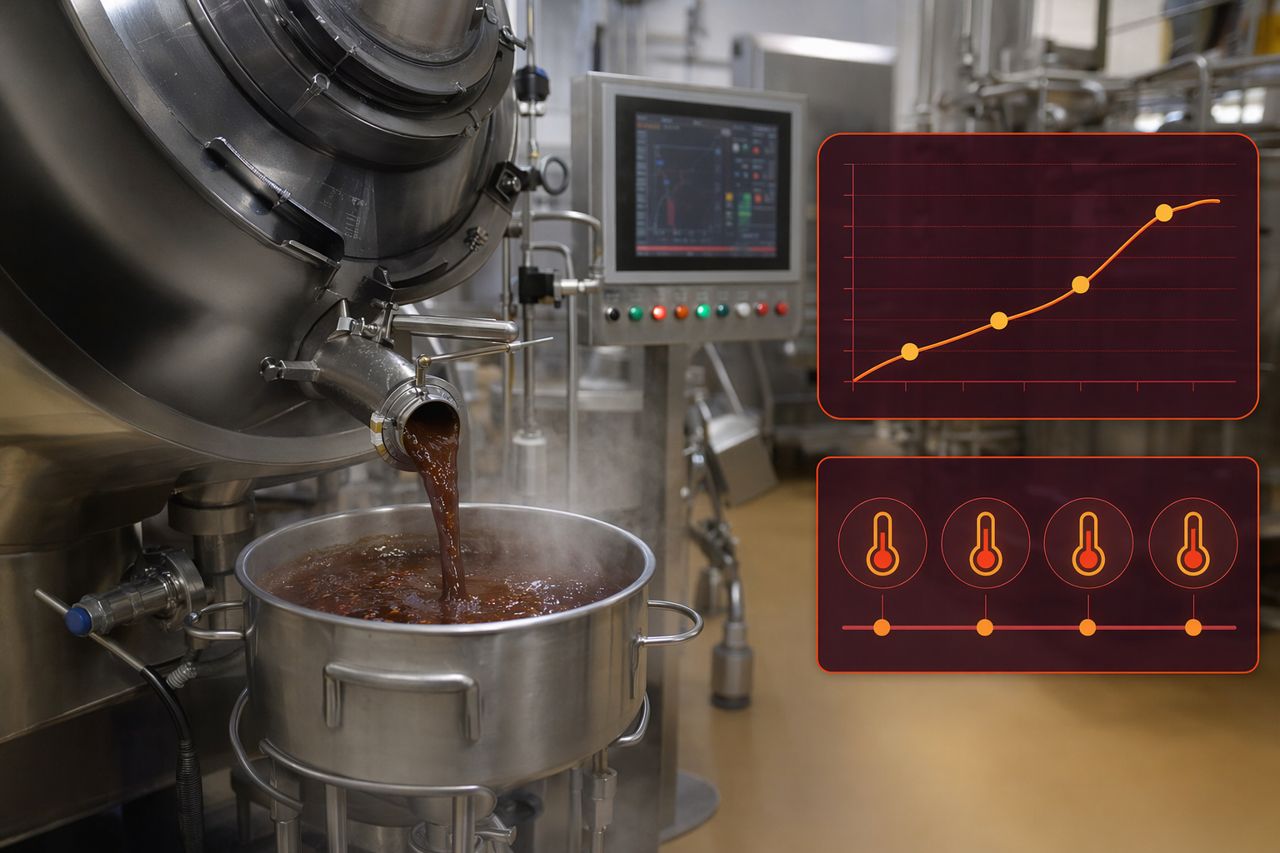
Hot fill is not a single temperature event. The sauce experiences heating, transfer, filling, dwell, and cooling. Each step can change the structure.
During holding, starch granules may continue swelling, pectin networks may reorganize, and protein or emulsion systems may tighten. At the same time, some sauces lose structure if acids, salts, shear, or residual biological activity weaken the matrix.
That is why two batches with the same formula can perform differently if one batch has longer hot hold, slower cooling, or a different transfer path.
3. Shear can hide instability until later
A sauce may look smooth immediately after high-shear mixing or pumping because the structure has been temporarily reduced. After filling, the system can rebuild — or fail to rebuild.
This is especially important for:
- Mayonnaise-style sauces and emulsified dressings
- Tomato and chili sauces with suspended particulates
- Sweet glazes that need surface cling
- Pourable cooking sauces with starch and gum blends
If the sauce is measured only after aggressive mixing, the factory may approve a batch that later thickens, thins, or separates in finished packaging.
4. Raw materials bring variable biopolymers
Plant-based sauce inputs are not identical from lot to lot. Tomato, chili, onion, mango, garlic, herbs, and vegetable concentrates vary in pectin, cellulose, hemicellulose, starch, soluble solids, and particle structure.
That variation changes water binding, pulp breakdown, serum release, and mouthfeel. A cloud kitchen sauce factory using seasonal or multi-origin inputs can see drift even when the recipe sheet has not changed.
This is where an R&D-led food enzyme supplier for sauce manufacturing can help identify which structural fraction is driving the behavior — and whether an enzyme step should be used to standardize it before final cook or fill.
Where enzymes can help — and where they should not be forced
Enzymes are useful when the drift is linked to a controllable substrate: pectin, starch, cellulose-rich pulp, protein, or other sauce-building components. They are not a universal thickener or thinner, and they should not be added without a defined target.
A good enzyme strategy can support:
- More consistent pulp breakdown in tomato, chili, fruit, and vegetable bases
- Improved yield from high-solids pastes or pulps
- Better pumpability before final formulation
- Reduced post-fill thickening caused by uncontrolled hydration
- More repeatable mouthfeel across raw material lots
- Cleaner separation between base preparation and final viscosity setting
The best results often come from treating a base stream, then building final texture with the right starch, gum, oil phase, or particulate load. This gives the factory more control than trying to correct viscosity at the end of the batch.
A practical diagnostic workflow for R&D and production
Step 1: Build a drift profile, not a single reading
Track texture at key points:
- After cooking
- After transfer or recirculation
- At fill
- After hot hold
- After cooling
- After storage simulation
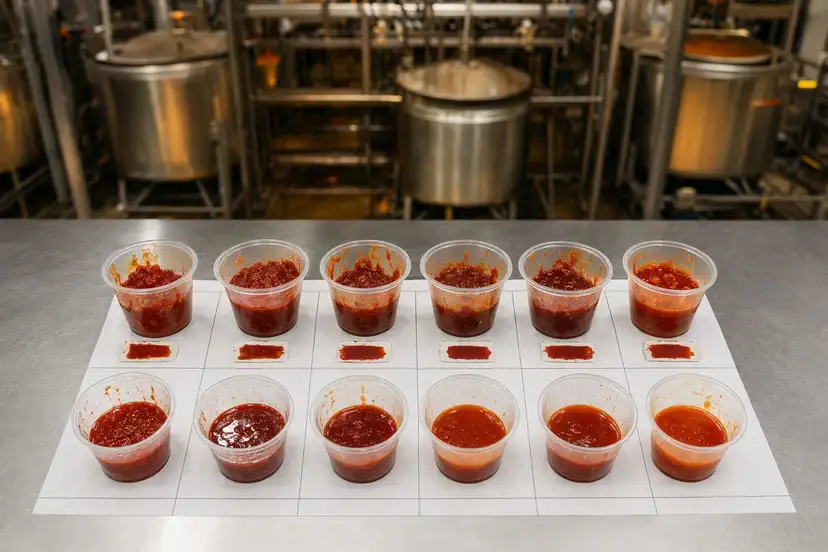
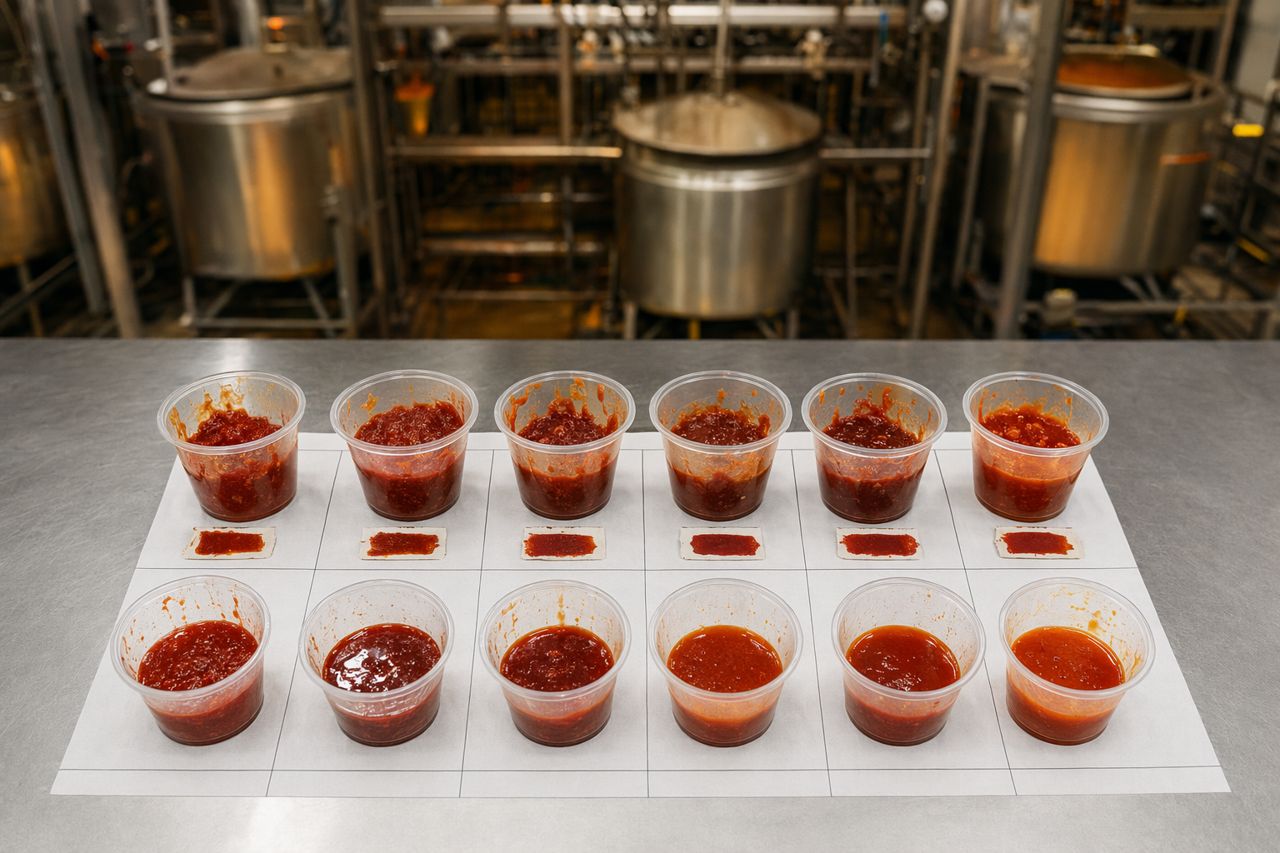
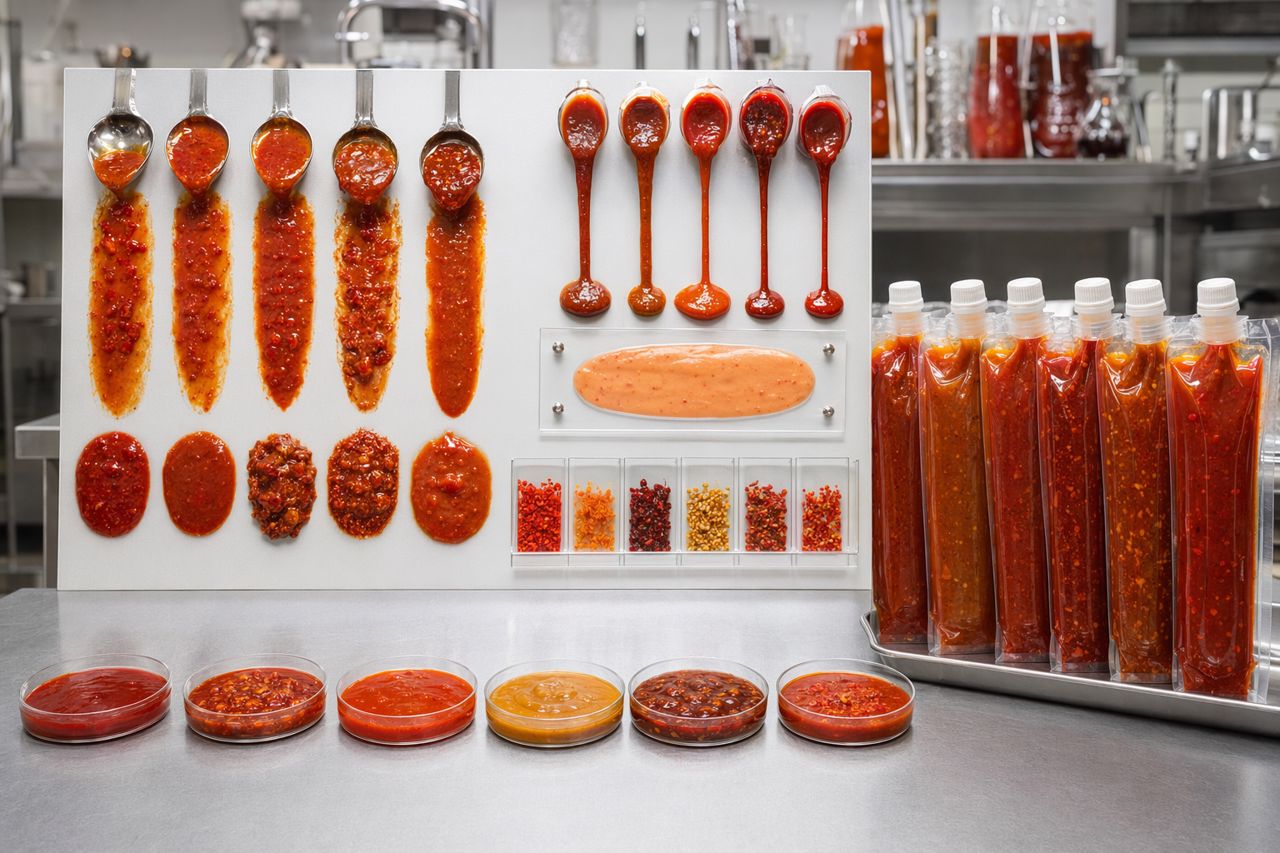
Pair viscosity observations with visual checks: cling, flow line, spoon break, particle suspension, oil ring, serum release, and nozzle behavior. The point is to understand when the sauce changes, not just that it changes.
Step 2: Separate heat effects from ingredient effects
Run a controlled comparison between fresh-cooked sauce, extended-hold sauce, and cooled sauce. If the drift appears only after a longer hot hold, the issue may be hydration, thermal restructuring, or heat-sensitive ingredient interaction. If it appears immediately after high shear, the process path may be the driver.
Step 3: Test the base before the final sauce
For sauces built from tomato, chili, fruit, vegetable, or legume bases, evaluate the base stream separately. If the base is unstable, the finished sauce will usually need over-correction with gums or starches, which can damage flavor release and mouthfeel.
Step 4: Use enzyme trials with a clear endpoint
An enzyme trial should answer a production question:
- Can the base reach a more consistent flow before final blending?
- Can raw material variability be reduced?
- Can yield improve without making the sauce watery?
- Can post-fill thickening be reduced without losing cling?
- Can the final sauce keep its desired mouthfeel after cooling?
LadleMetric structures pilot trials around the sauce’s commercial target: filling behavior, portion control, consumer texture, and repeatable finished-pack performance.
Formulation levers that reduce drift
Enzyme selection is only one lever. In many sauce systems, better repeatability comes from adjusting the full texture architecture:
- Base treatment: standardize pulp, puree, or paste before final formulation.
- Hydration sequence: ensure starches, gums, fibers, and powders are fully dispersed before hot fill.
- Shear control: avoid creating a viscosity reading that cannot survive the actual process path.
- Acid and salt timing: manage interactions that can tighten or weaken the matrix.
- Cooling profile: reduce uncontrolled post-fill structure change.
- Rework discipline: control how previously heated material affects the next batch.
The objective is not to make every sauce thicker. It is to make each sauce land where the brand needs it: pourable, spoonable, dip-ready, glaze-like, pumpable, or coating-stable.
What LadleMetric needs to recommend the right enzyme path
To evaluate a hot-filled sauce drift issue, our technical team typically asks for:
- Sauce type and target texture
- Main structural ingredients: starches, gums, pulps, proteins, oil phase, fibers
- pH range and heat process overview
- Fill format: pouch, cup, jar, bottle, sachet, bulk bag, or back-of-house pack
- Where drift appears in the process
- Desired change: thinner base, stronger cling, better suspension, smoother mouthfeel, higher yield, or lower variation
- Any label, dietary, or regional compliance requirements
From there, we can propose a focused pilot: candidate enzyme direction, processing window, control sample structure, and finished-sauce evaluation criteria.
The commercial cost of ignoring drift
Viscosity drift creates hidden losses. Fillers run slower. Operators adjust water or starch on the floor. Batches need rework. Product clings differently across service locations. Sachets underperform. Menu items lose consistency.
For cloud kitchen networks, the damage is amplified because one sauce may support multiple brands, SKUs, or delivery formats. A small drift at the factory can become a visible customer-experience gap at scale.
Controlled texture is therefore a throughput issue, a yield issue, and a brand repeatability issue.
Work with LadleMetric on sauce viscosity control
LadleMetric supports sauce manufacturers with enzyme-led trials for plant bases, savory sauces, dressings, glazes, condiments, dips, and high-throughput cloud kitchen formats. We help R&D and production teams identify whether viscosity drift is coming from raw material structure, process path, hydration, or formulation balance — then design a practical route to control it.
If your hot-filled sauce changes after holding, send us the process context and the texture target. We will help you map the drift and quote the right enzyme solution for your pilot.
Ready to stabilize your next sauce run? Use the on-site request a quote form and tell us what the sauce is doing after hot fill.