Shelf-Life Risks for Small-Batch Sauce Brands Scaling Into Factory Production
Small-batch sauces often win because they taste alive: bright acid, layered aromatics, visible texture, and a finish that feels hand-built. The risk comes when that same recipe moves into a cloud kitchen sauce factory and suddenly needs to survive larger kettles, faster filling, tighter schedules, and longer distribution windows.
Shelf life is not only a microbiology question. For sauce manufacturers, it is also a texture, yield, separation, heat history, and repeatability problem. A sauce can be safe yet still fail commercially because it thins out, gels unevenly, throws water, breaks emulsion, darkens, clogs a depositor, or tastes cooked after scale-up.
LadleMetric supports sauce teams with enzyme-led process development for plant-based solids, pulps, starch-bearing ingredients, emulsified systems, and high-particulate recipes. As a food enzyme supplier for sauce manufacturing, our role is to help R&D and production teams protect the sensory identity of the sauce while building a process that can repeat under factory pressure.
Why small-batch shelf life changes at factory scale
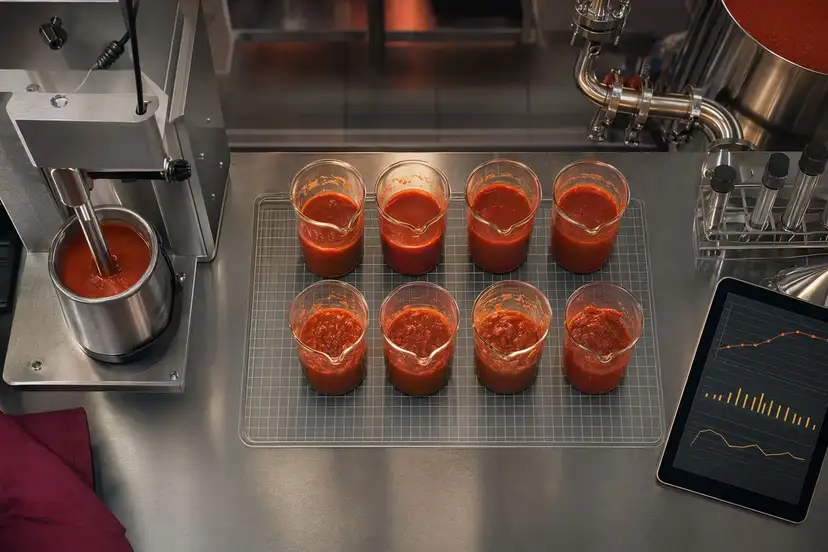
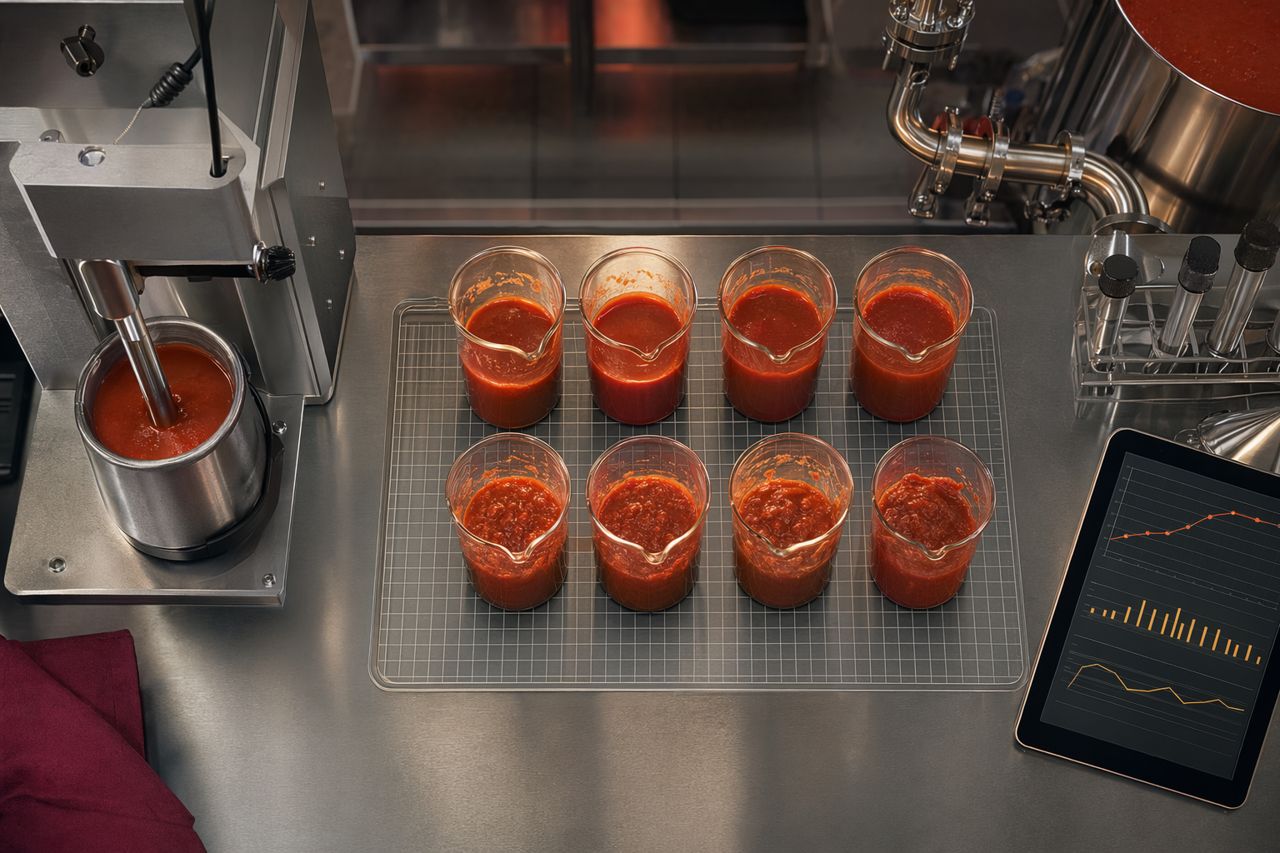
A five-liter trial and a 500-kilogram production run do not behave like larger and smaller versions of the same thing. The sauce experiences different shear, longer heat-up and cool-down curves, broader ingredient variability, and more exposure to hold time.
Common scale-up shifts include:
- Longer thermal exposure: Aromatics, color, and viscosity can change during extended kettle residence.
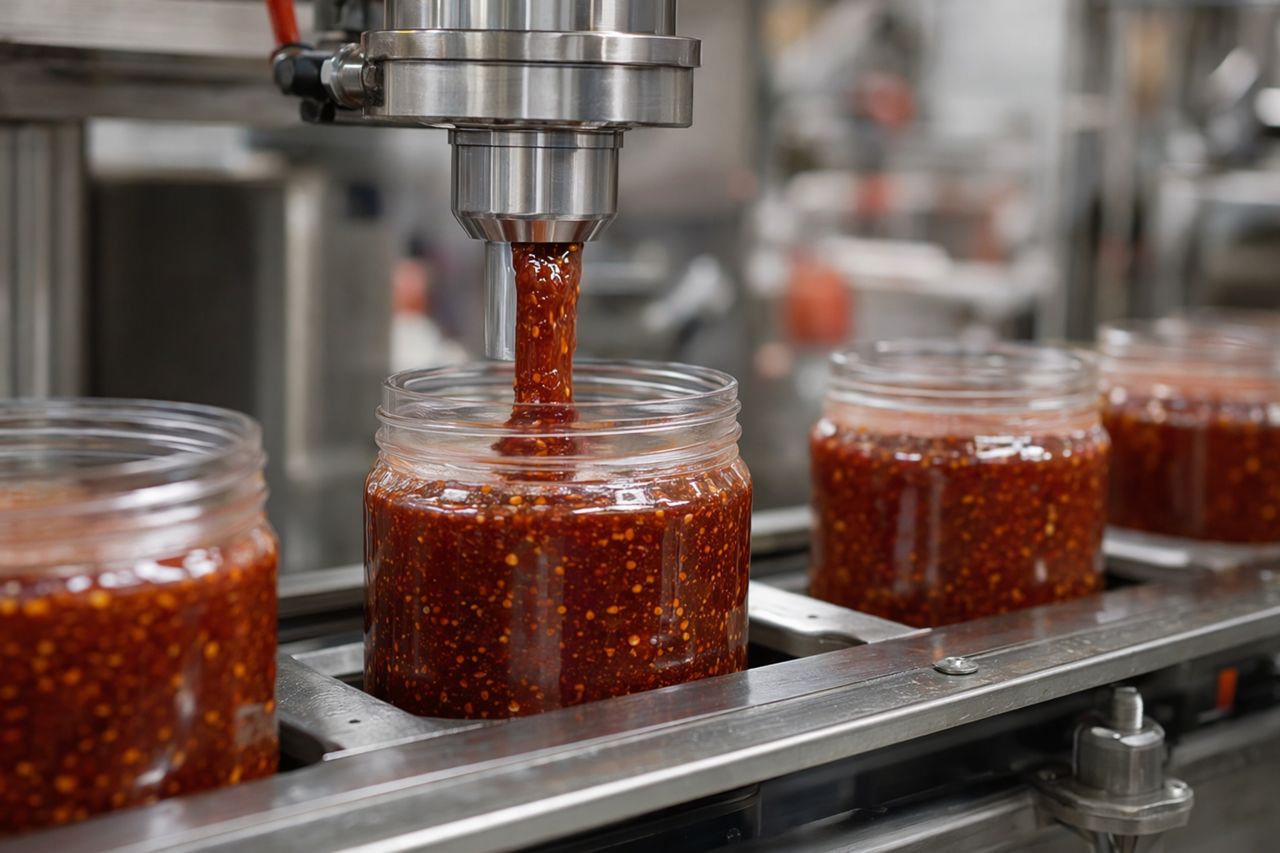
- Different shear profile: Pumps, mixers, transfer lines, and depositors can overwork fragile emulsions or under-disperse stabilizers.
- Ingredient variability: Tomato, chili, onion, fruit, garlic, and spice solids carry natural variation in fiber, pectin, starch, oil, and insoluble content.
- Batch staging delays: Sauces may wait between cooking, homogenizing, filling, cooling, and packing.
- Packaging interaction: Hot-fill, cold-fill, pouch, jar, bottle, and dip-cup formats each stress the sauce differently.
The result is often a sauce that passed a bench trial but fails after three to six weeks on retained samples.
The main shelf-life failure modes in scaled sauce production
1. Viscosity drift after filling
Many sauces leave the filler at target viscosity, then change during storage. Some thin out as plant solids hydrate or break down. Others continue to thicken as starches, gums, fibers, or proteins reorganize.
For a cloud kitchen sauce factory, viscosity drift creates operational issues as well as consumer issues. A sauce that is too thin can splash, leak, or fail portion-control targets. A sauce that becomes too thick can leave too much product in the pack, frustrate dispensing, or create inconsistent coverage on menu items.
Enzyme-supported trials can help tune the way plant fibers, pulps, and starch-bearing inputs contribute to body. The objective is not simply to make a sauce thinner. It is to reach a viscosity window that holds through processing, filling, storage, and service.
2. Phase separation and water release
Separation is one of the most visible shelf-life failures. Tomato sauces throw serum. Chili sauces develop a watery top layer. Dressings split. Dips form liquid pockets around particulates.
This often comes from a mismatch between ingredient structure and process conditions. Insoluble vegetable particles, oil droplets, emulsifiers, gums, proteins, salts, acids, and heat all compete to define the final matrix.
Enzymes can be used to modify selected plant structures before final stabilization, improving dispersion, solids utilization, and mouthfeel. When paired with the right thermal step and stabilizer strategy, this can reduce the need to over-thicken the recipe just to hide separation risk.
3. Texture that does not match the original brand experience
Small-batch brands usually have a signature texture: chunky-but-pourable salsa, glossy chili glaze, creamy garlic sauce, pulpy tomato base, or spoonable dip. During factory scale-up, texture can become either too processed or too inconsistent.
The most common texture complaints are:
- Loss of fresh pulp character
- Grainy or fibrous mouthfeel
- Excessive gel formation
- Weak cling on food surfaces
- Poor suspension of herbs, seeds, or chili flakes
- Overly slick or artificial finish
A controlled enzyme step can help release desirable body from plant materials while reducing coarse fiber perception. The right approach depends on the ingredient system, target mouthfeel, and downstream process.
4. Yield loss from under-used solids
Small-batch production can tolerate more waste. Factory production cannot. When pulp, mash, vegetable trim, chili solids, or fruit bases are not fully utilized, the cost shows up as lower yield, strainer loss, higher rework, or more expensive formulation compensation.
Enzyme processing can improve extraction and solids conversion in selected sauce bases, helping factories recover more usable texture and flavor from the same input. This is especially relevant for tomato bases, pepper mashes, onion-garlic pastes, fruit glazes, and vegetable-forward sauces.
For buyers, the value is practical: better process yield, fewer emergency formula corrections, and a more repeatable cost model.
5. Heat damage and flavor flattening
More heat is not always better. Some scale-up teams respond to shelf-life concern by increasing cook intensity or hold time. That can solve one problem while creating others: darker color, cooked notes, loss of top-note aromatics, and viscosity shifts.
A better question is: what structure needs to be built before the final heat step, and what structure needs to be protected after it?
Enzyme-assisted pre-processing can support texture development before final finishing, allowing the process to avoid unnecessary overcooking. It must be validated within the full recipe, because acid, salt, oil, sugar, and solids all influence performance.
Where enzymes fit in sauce shelf-life strategy
Enzymes are not preservatives, and they should not be treated as a shortcut around sanitation, pH control, heat treatment, packaging validation, or retained-sample testing.
Their value is in process control. They can help sauce manufacturers manage the physical structure that determines pourability, suspension, mouthfeel, yield, and consistency.
Potential enzyme-supported objectives include:
- Releasing usable body from tomato, chili, fruit, and vegetable solids
- Reducing coarse fiber perception without removing identity
- Improving pulp dispersion before final cooking
- Supporting stable viscosity targets across batches
- Reducing strainer loss and improving usable yield
- Helping emulsified or semi-emulsified sauces maintain a cleaner texture
- Improving repeatability when raw material quality changes seasonally
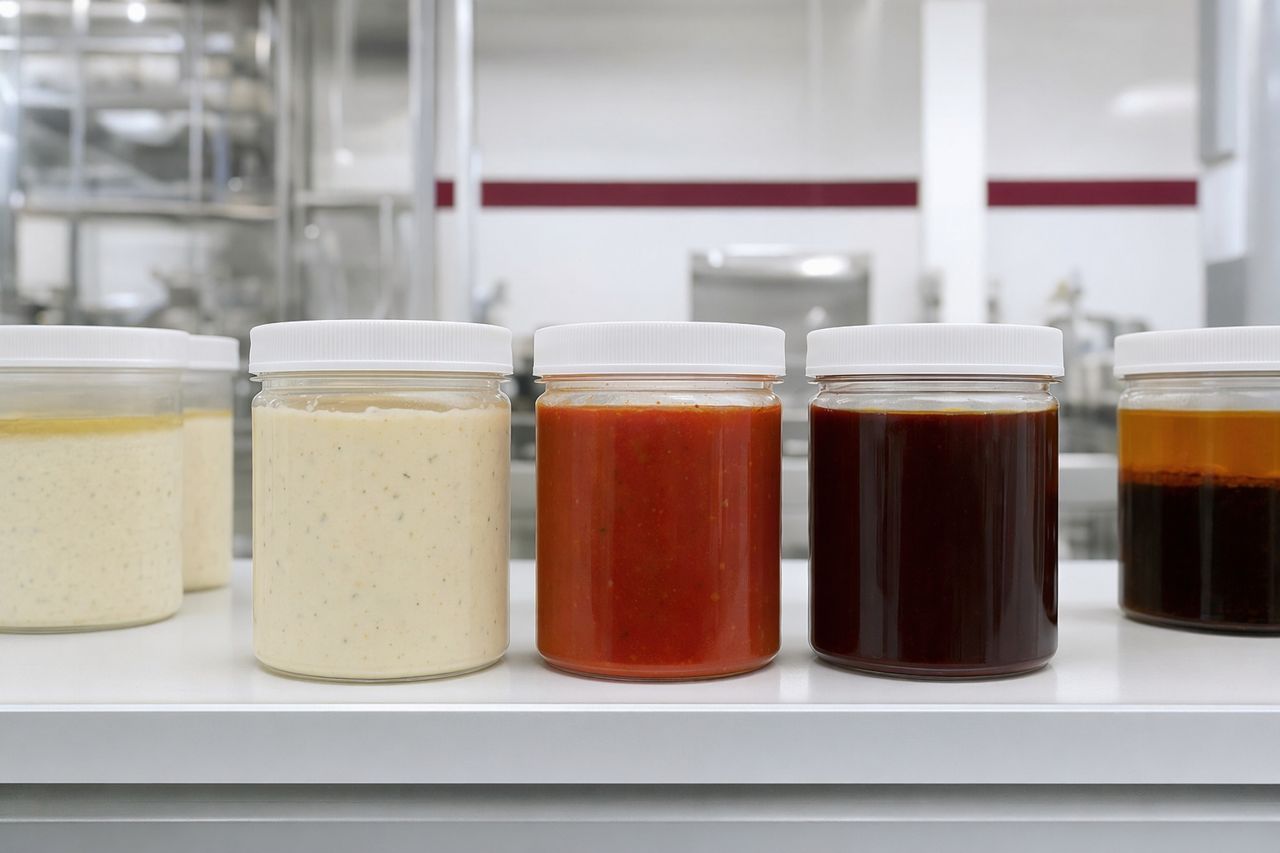
The correct enzyme choice depends on the substrate and the target. A premium chili crisp sauce, a tomato pizza sauce, a creamy garlic dip, and a sweet-spicy glaze do not need the same intervention.
How to de-risk the first factory trial
Before moving from pilot to full production, define what success looks like in measurable factory terms.
Set clear trial targets
Useful targets include:
- Fill temperature and viscosity window
- Viscosity after cooling
- Viscosity after retained storage
- Pour, pump, or spoon behavior
- Separation threshold
- Particulate suspension
- Strainer loss or kettle residue
- Filled-pack weight consistency
- Sensory match against the original small-batch reference
Trial the process, not just the ingredient
An enzyme is only one part of the system. Trial design should include addition point, temperature window, contact time, shear, heating sequence, final stabilization, and packaging format.
LadleMetric typically recommends comparing a control batch against one or more enzyme-supported process routes. The goal is to see whether the process produces a more stable, scalable sauce without moving the flavor away from the brand standard.
Keep retained samples under real conditions
Fast feedback is useful, but shelf-life risk reveals itself over time. Retained samples should be checked against the conditions the sauce will actually face: chilled chain, ambient storage, back-of-house handling, squeeze bottle transfer, pouch opening, or hot-hold service.
Factory teams should review not only safety and sensory results, but also how the sauce performs operationally after storage.
Buyer checklist: signs your sauce needs process redesign
Your small-batch sauce may need enzyme-supported process work if you are seeing:
- Different viscosity from batch to batch using the same formula
- Separation during retained storage
- Too much pulp or fiber loss at screening
- Sauce that pumps well on day one but poorly after storage
- Excessive kettle residue or line loss
- Over-thickening to compensate for instability
- Fresh flavor loss after scaling heat treatment
- Poor cling, coverage, or portion control in service
- Supplier variability affecting final texture
These are not just R&D frustrations. They affect cost of goods, line speed, customer complaints, and brand consistency.
What LadleMetric brings to sauce scale-up
LadleMetric works with sauce manufacturers that need practical enzyme solutions, not generic ingredient suggestions. We focus on pilot-ready recommendations tied to viscosity targets, mouthfeel, yield, and production repeatability.
Our support can include:
- Ingredient and process review
- Enzyme route selection for sauce substrates
- Pilot trial planning
- Batch comparison framework
- Texture and stability troubleshooting
- Scale-up guidance for production teams
- Quote support for commercial supply planning
The aim is controlled improvement: less guesswork, fewer failed plant trials, and a sauce that behaves the way the brand intended.
Request a quote for your sauce trial
If your sauce is moving from small-batch production into a cloud kitchen sauce factory, bring us the formulation challenge: target viscosity, process flow, packaging format, shelf-life concern, and current failure mode.
Request a quote through the on-site form, and LadleMetric will help scope an enzyme-supported trial path for your sauce manufacturing process.