Savory Sauce Flavor Systems for Delivery-First Restaurant Brands
Delivery has changed what a sauce must survive.
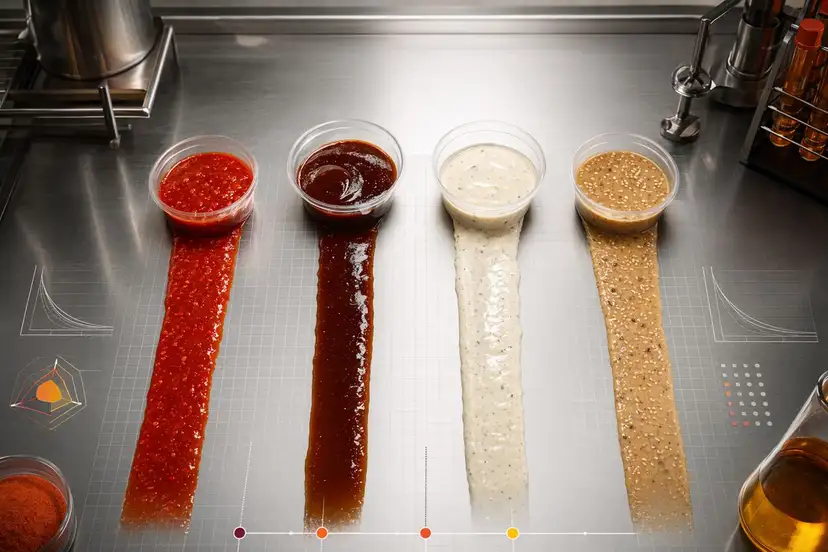
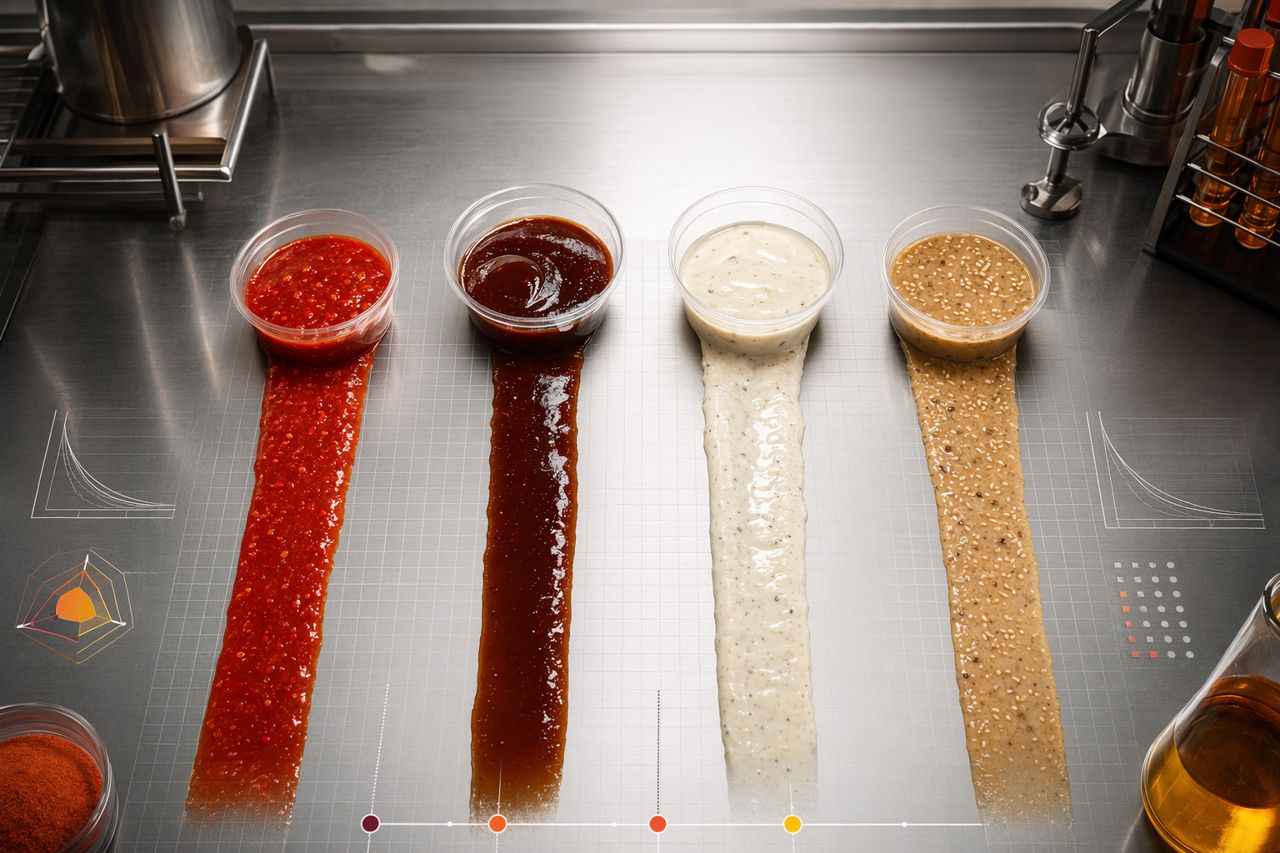
A sauce no longer only has to look right on a pass. It has to hold texture in a hot cup, cling to fried coating after transit, pour cleanly from a sachet, separate predictably from steam, and still taste intentional when the customer opens the lid fifteen to thirty minutes later.
For cloud kitchen sauce factories, that pressure creates a new formulation brief: build savory flavor systems that are bold, scalable, cost-aware, and repeatable across high-throughput production.
LadleMetric supports that brief as a food enzyme supplier for sauce manufacturing, helping R&D and production teams tune viscosity, mouthfeel, ingredient yield, and batch consistency without turning every new sauce into a long troubleshooting cycle.
Why delivery-first sauces need a different development model
Restaurant sauces developed for dine-in conditions often fail when they move into delivery.
Common issues include:
- Viscosity drift after holding, pumping, or hot-fill conditions
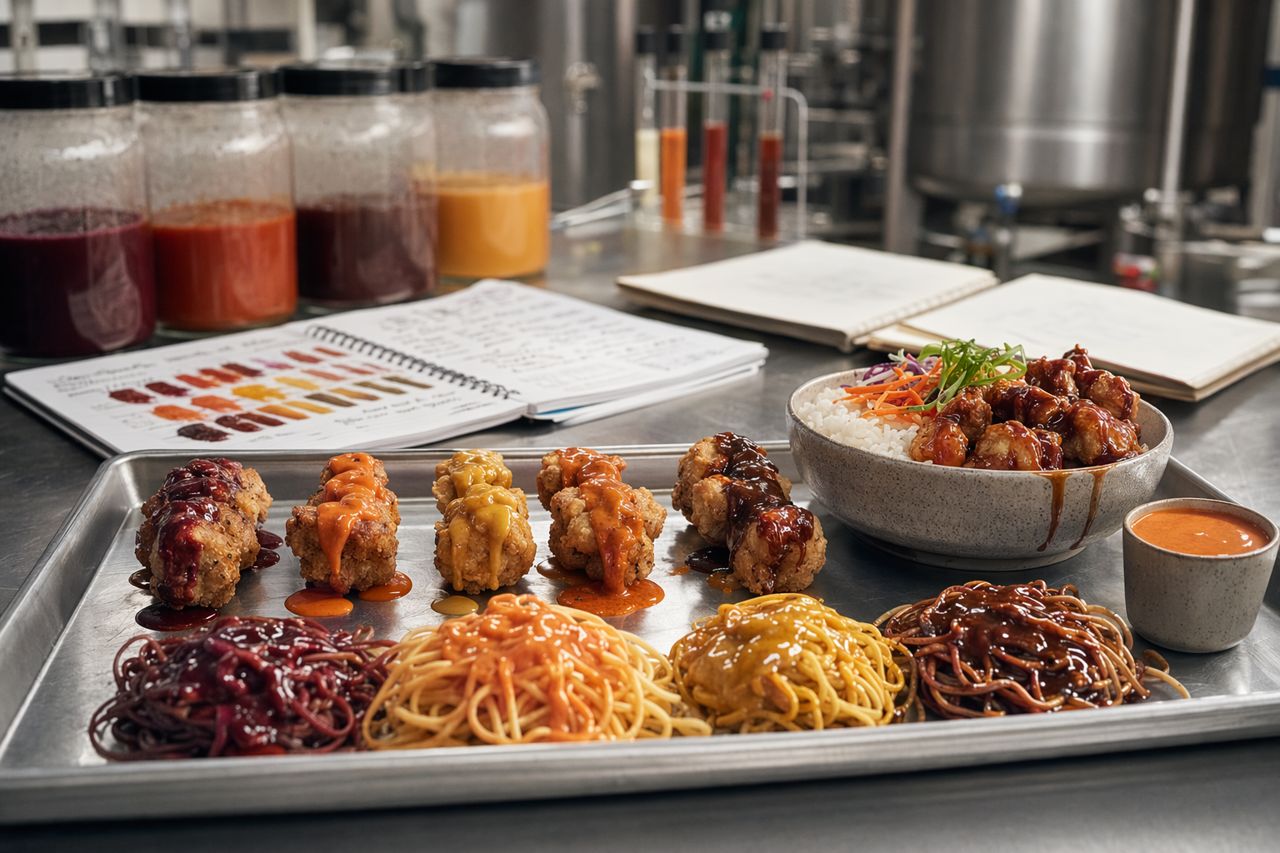
- Weak cling on wings, fries, noodles, rice bowls, and protein toppings
- Excessive starch heaviness that dulls spice, smoke, garlic, or umami notes
- Oil separation in mayo-style, chili crisp, glaze, and dressing systems
- Batch-to-batch texture variation from raw material variability
- Muted flavor release after cooling, reheating, or prolonged lid time
- Poor sachet or dip-cup behavior where sauces either plug, string, or flood
In a delivery-first model, sauce is not a garnish. It is a controlled flavor delivery system.
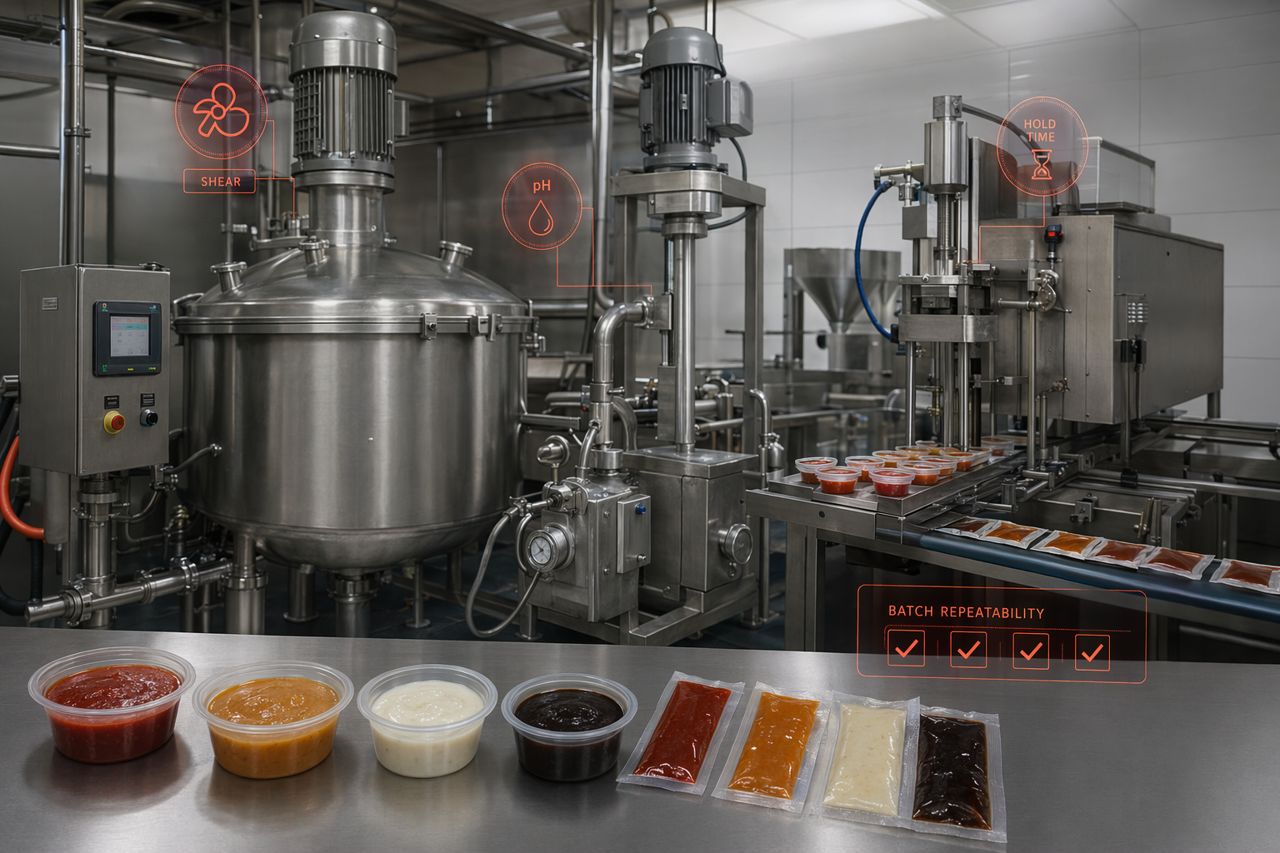
That means formulation work needs to connect sensory targets with production behavior: shear, heat history, pH, solids load, pumpability, particulate suspension, and finished-pack stability.
Where enzyme-supported formulation can help
Enzymes are not a shortcut for good recipe design. Used correctly, they are precision tools for adjusting how sauce ingredients behave under processing.
In savory sauce manufacturing, enzyme-supported development can help teams:
Tune viscosity without flattening flavor
Many sauce systems rely on starches, vegetable solids, gums, pulses, grains, dairy components, or protein-rich ingredients. These materials can build body, but they can also create pasty textures, masking, or inconsistent flow.
LadleMetric helps teams evaluate enzyme pathways that modify texture contribution while preserving the intended eating experience. The goal is not simply to thin or thicken. The goal is to hit the right pour, cling, coating, and release profile for the application.
Improve mouthfeel in high-solids sauces
High-solids sauces often deliver strong flavor but can become heavy, chalky, gummy, or grainy. This is especially common in tomato bases, chili bases, legume-rich sauces, nut or seed systems, and plant-forward savory spreads.
With the right pilot plan, enzyme selection can support smoother mouthfeel, better body integration, and cleaner flavor perception.
Support yield from plant-based or culinary raw materials
Cloud kitchen sauce factories often work with variable vegetable, grain, spice, protein, and fermented inputs. Enzyme-assisted processing can help improve extraction, dispersion, and usable solids behavior, depending on the matrix.
For production teams, that can mean better use of purchased ingredients, less rework, and a more controlled path from bench sample to factory batch.
Reduce formulation firefighting
A sauce that works once in the lab is not yet a scalable sauce.
LadleMetric focuses on repeatability: process tolerance, ingredient variation, holding behavior, and the texture curve from kettle to pack to customer experience. The aim is to reduce the number of emergency reformulations after launch.
Key sauce categories for delivery brands
Tomato, chili, and red sauce systems
Delivery sauces in this group need brightness, body, and heat stability without becoming dull or pulpy. Enzyme-supported work may focus on vegetable solids behavior, pulp texture, smoothness, and controlled release of savory top notes.
Relevant applications include:
- Pizza and pasta sauces
- Arrabbiata, marinara, and roasted tomato bases
- Chili garlic sauces
- Wing and dip sauces
- Tomato-based bowl sauces
Glazes and sticky coating sauces
Glazes must cling to product surfaces but avoid becoming rubbery, stringy, or overly sweet. In delivery, they need controlled flow after heat exposure and transit.
Relevant applications include:
- Korean-style sticky sauces
- Barbecue glazes
- Teriyaki-style coatings
- Sweet chili coatings
- Fried chicken and plant-based protein glazes
Mayo-style and creamy savory sauces
Creamy sauces need stable texture, clean flavor release, and controlled viscosity across filling, chilling, portioning, and delivery. Enzyme considerations may relate to ingredient preparation, protein or starch interactions, and mouthfeel refinement depending on the formulation.
Relevant applications include:
- Garlic mayo
- Spicy mayo
- Ranch-style sauces
- Creamy burger sauces
- Plant-based creamy dips
Fermented, umami, and culinary base sauces
Fermented and umami-rich sauces are powerful, but they can be difficult to standardize. Raw material variability, salt balance, acid profile, and texture can shift from batch to batch.
Relevant applications include:
- Miso-style sauces
- Soy and mushroom bases
- Fermented chili sauces
- Savory cooking pastes
- Ramen, noodle, and rice bowl sauce concentrates
Dressings and pourable finishing sauces
Delivery dressings must pour cleanly, coat evenly, and avoid watery separation in transit. Enzyme-supported ingredient preparation can be part of a broader strategy for smoothness, suspension, and flavor release.
Relevant applications include:
- Sesame dressings
- Herb and garlic dressings
- Yogurt-style savory sauces
- Vinaigrette-style systems with particulates
- Bowl and salad finishing sauces
The delivery sauce development checklist
Before selecting an enzyme strategy, LadleMetric helps teams define the sauce target in production language.
Important questions include:
- What is the eating format? Dip, drizzle, coating, glaze, sachet, cup, bowl sauce, or back-of-house cooking base.
- What is the target texture curve? Hot fill, ambient hold, chilled storage, reheating, delivery transit, and consumption.
- What must the sauce cling to? Fried surface, starch base, vegetable, protein, noodle, rice, or bread.
- Which raw materials drive variability? Tomato, chili, onion, garlic, starch, grain, pulse, dairy, egg, oil, spice paste, or fermented solids.
- Where does the current formulation fail? Pumping, filling, separation, flavor release, body, graininess, syneresis, or customer experience.
- What are the factory constraints? Existing kettles, mixers, holding tanks, fill lines, thermal steps, and cleaning routines.
This keeps development focused on commercial outcomes instead of isolated ingredient experiments.
How LadleMetric runs sauce enzyme projects
1. Formulation intake
We review the sauce concept, ingredient deck, process map, target texture, current defects, and launch constraints. For existing products, we also look at production pain points and customer feedback.
2. Matrix screening
We identify which components are most likely driving the texture, yield, mouthfeel, or stability issue. This may include starch-rich materials, plant solids, protein sources, vegetable pulp, or complex culinary bases.
3. Pilot trial design
We build a practical pilot plan around your process reality. The goal is to compare treatment paths against a control and evaluate flow, cling, mouthfeel, flavor release, stability, and line behavior.
4. Sensory and processing review
A sauce must satisfy both the eater and the factory. We look at sensory attributes alongside pumpability, filling behavior, hot or cold holding, and visible stability.
5. Scale-up support
Once a preferred route is selected, LadleMetric supports transition into production trials, helping define practical control points so the result can be repeated.
What buyers should expect from a practical food enzyme supplier
A good supplier should not simply recommend a product name and leave the factory to guess.
For sauce manufacturing, the useful support is more specific:
- Clear link between enzyme choice and formulation objective
- Guidance for pilot trial structure
- Compatibility thinking across pH, heat, salt, oil, solids, and process order
- Attention to sensory impact, not only processing behavior
- Scale-up support for production teams
- Documentation suitable for procurement and quality review
- Realistic discussion of what enzymes can and cannot solve
That is the LadleMetric approach: controlled experimentation, commercial discipline, and formulation support built for high-throughput sauce production.
Built for cloud kitchen sauce factories
Cloud kitchen brands move quickly. Menus change, limited-time offers launch, regional flavors rotate, and sauce volumes can spike with little warning.
That speed puts pressure on the sauce factory to maintain:
- Fast concept-to-pilot timelines
- Repeatable texture targets
- Ingredient cost control
- Stable production behavior
- Reliable delivery performance
- Consistent sensory experience across locations and batches
LadleMetric helps sauce teams build flavor systems that can keep up with that pace while reducing avoidable reformulation risk.
Request a quote for your sauce project
If you are developing a savory sauce, glaze, dressing, dip, or culinary base for delivery-first foodservice, LadleMetric can help you evaluate enzyme-supported options for texture, yield, mouthfeel, stability, and repeatability.
Use the on-site request a quote form to share your sauce type, current challenge, target format, and production stage. Our team will review the brief and respond with a practical path for trial planning.