Pumpability and Filling Problems in Thick Sauces
Thick sauce is supposed to feel generous. It should cling to food, hold visual body, and deliver a consistent bite across every order. But in a cloud kitchen sauce factory, the same structure that makes a sauce desirable can become a production constraint.
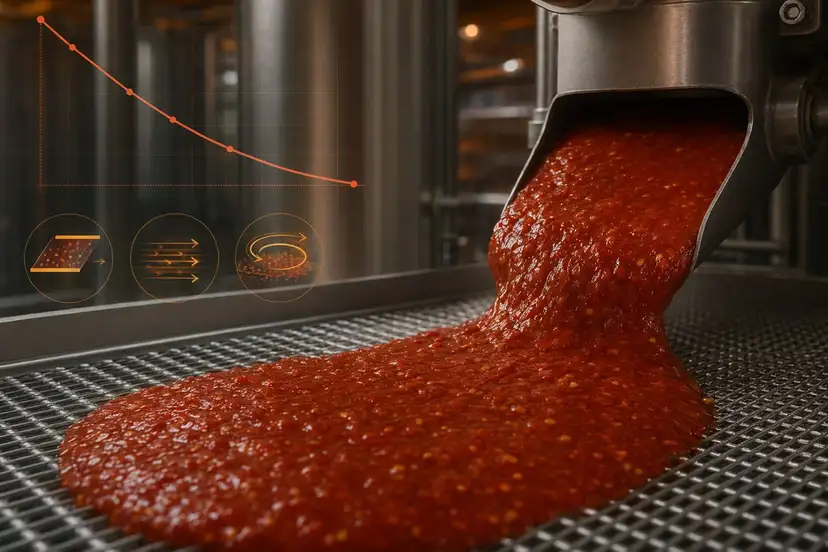
Tomato fiber, chili skins, garlic pulp, fruit solids, starch systems, seed particles, emulsified oil, and hydrocolloids can all contribute to drag. A batch that looks correct in the kettle may hesitate through transfer lines, surge at the filler, string at the nozzle, or drift in fill weight after a short hold.
LadleMetric helps sauce manufacturers diagnose these problems at the formulation level. As a food enzyme supplier for sauce manufacturing, we focus on controlled texture adjustment: improving flow without flattening mouthfeel.
Why thick sauces stop behaving on the line
Pumpability problems rarely come from thickness alone. They usually come from how the sauce structure responds to shear, heat, hold time, and solids distribution.
Common symptoms include:
- Pump cavitation or inconsistent suction during transfer
- Pressure spikes in elbows, valves, and narrow sections
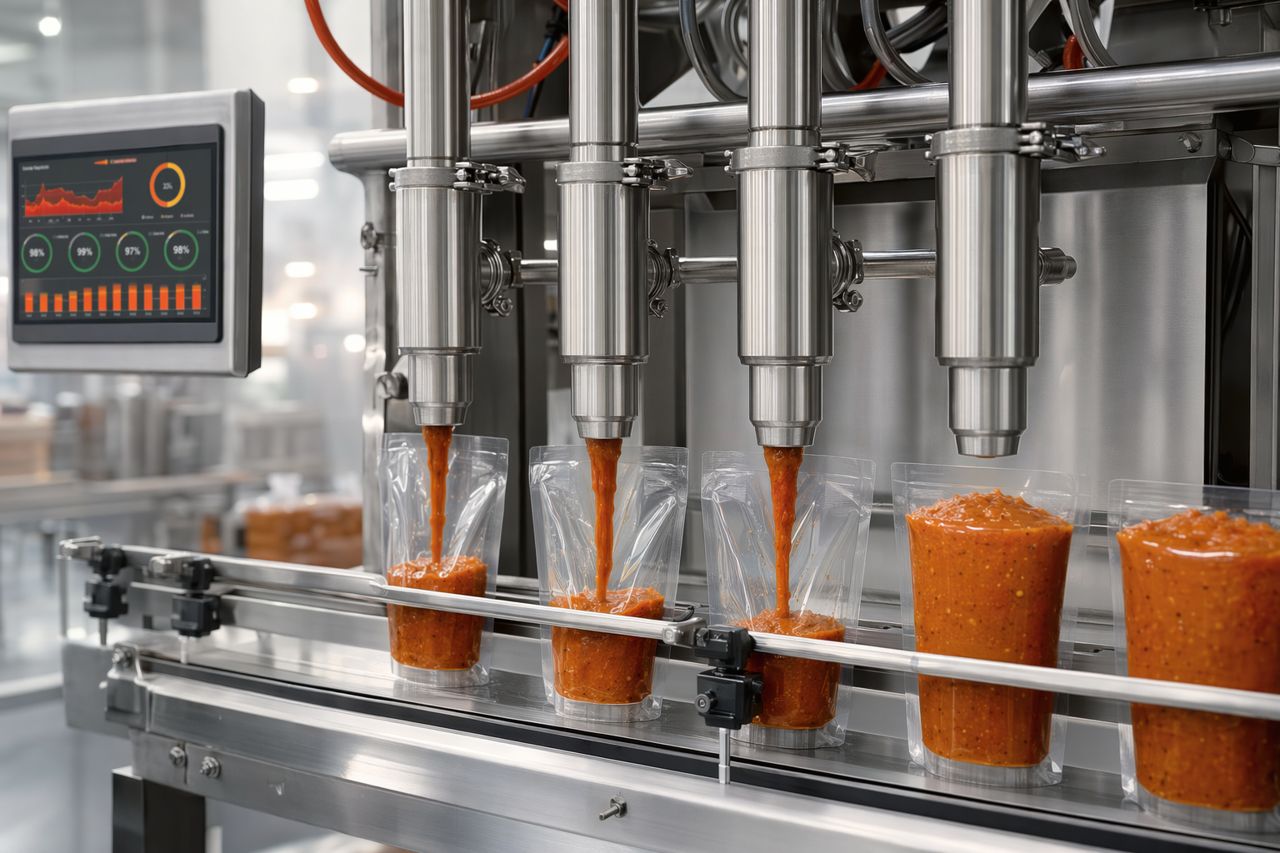
- Filler hesitation, tailing, splatter, or poor cut-off
- Unstable fill weights across the run
- Sauce that is too stiff when cold but too loose after heating
- Visible particle separation after holding
- Excessive rework due to batch-to-batch viscosity drift
The factory sees a line problem. R&D often finds a structure problem.
The formulation mechanics behind pump drag
In thick sauces, viscosity is built by several overlapping systems. If one system varies, the entire flow profile can change.
Fiber and cell-wall structure
Vegetable- and fruit-based sauces often contain pectin-rich, cellulose-rich, or hemicellulose-rich solids. These networks can trap water and increase apparent body. That can be useful for cling, but too much intact structure can create lumpy resistance through pumps and filler heads.
Starch and thermal history
Cooked starch can provide gloss and body, but shear and holding conditions influence final behavior. When starch is paired with puree solids, gums, or sugars, small process changes can create large differences in flow.
Particle size and hydration
A sauce can pass a visual check while still containing inconsistent hydrated solids. Oversized or unevenly hydrated particles can cause filler variability, poor cut-off, and rough mouthfeel.
pH, salt, sugar, and oil phase effects
Acid, salt, sweeteners, and emulsified oil influence how solids hydrate and interact. A chili glaze, tomato base, creamy dressing, and garlic mayo may all require different process logic even when the target thickness appears similar.
Where enzyme processing can help
Targeted enzyme pre-treatment can make thick sauces easier to move while preserving the sensory profile that consumers expect.
Depending on the raw material and target texture, LadleMetric may evaluate enzyme systems that help:
- Reduce excessive fiber network strength in vegetable or fruit purees
- Release bound water for smoother pump transfer
- Improve pulp uniformity before seasoning and final thickening
- Stabilize natural variation in tomato, chili, fruit, or allium inputs
- Support higher usable yield from puree-based ingredients
- Improve nozzle cut-off and filling repeatability
- Reduce reliance on corrective dilution or aggressive heating
The objective is not simply viscosity reduction. The objective is controlled flow.
A better target: pumpable body
For commercial sauce production, the ideal texture is not the thickest possible result. It is a repeatable flow profile that works across the full process:
- Mixes efficiently in the kettle or batch tank
- Transfers without excessive pressure demand
- Holds without unwanted separation
- Fills cleanly at the intended speed
- Sets into the desired eating texture after packing or service
This is why LadleMetric separates mouthfeel targets from equipment behavior. A sauce can feel rich in the mouth while still moving predictably through a line.
Pilot trial logic for sauce factories
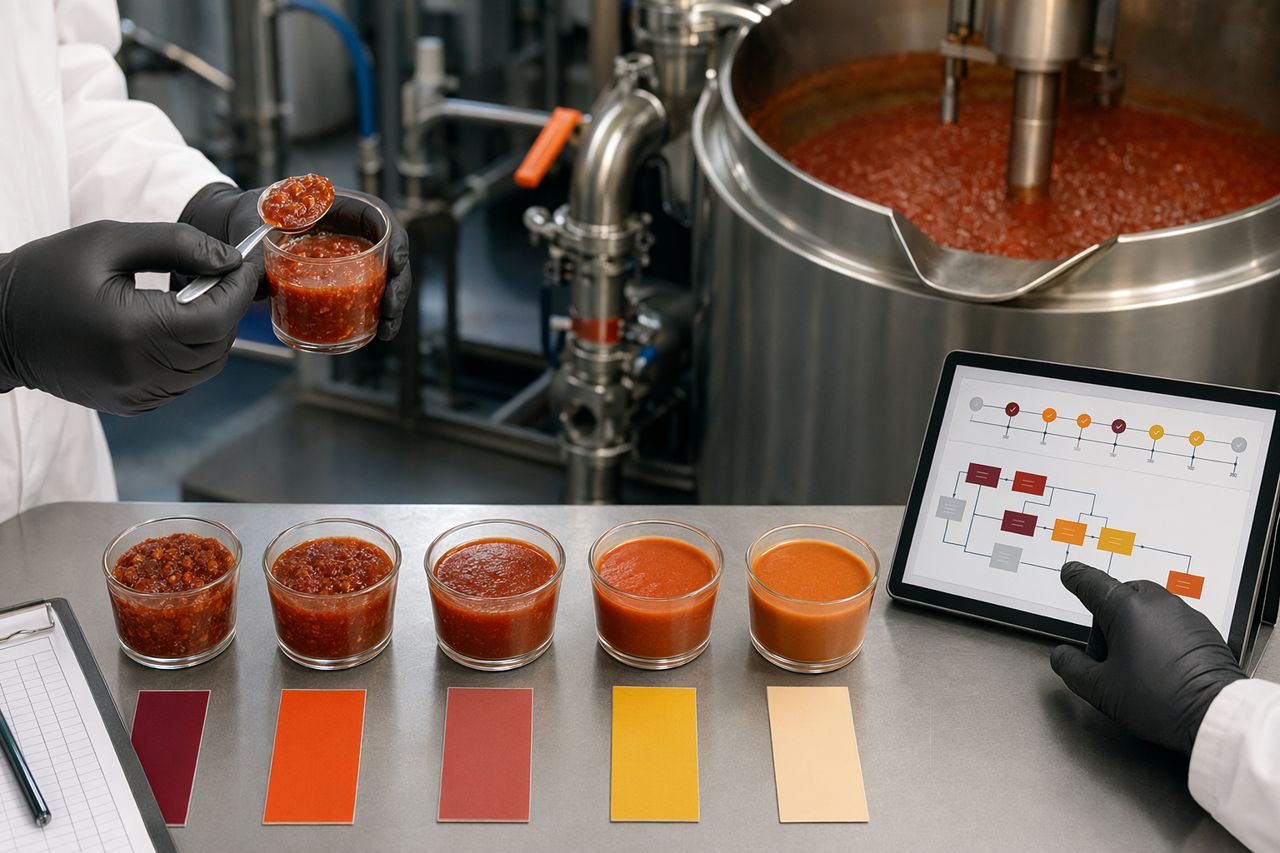
A practical enzyme trial should be built around factory outcomes, not lab curiosity. We usually recommend mapping three zones before reformulation begins.
1. Raw material variability
Document the puree, paste, spice, pulp, starch, gum, and oil inputs that shift most often. For cloud kitchen sauce production, supplier lots and seasonal raw materials can make viscosity drift appear random.
2. Process stress points
Identify where the sauce starts to misbehave: post-cook transfer, cooling, holding, recirculation, filling, or after overnight storage. The right intervention point depends on the failure point.
3. Finished product boundaries
Define what cannot change: visual body, flavor release, cling, gloss, pulp identity, heat perception, and customer eating experience. Enzyme processing should protect the product brief, not overwrite it.
Practical outcomes buyers care about
When pumpability is brought under control, the value is visible across production and quality teams.
Potential gains include:
- More stable filling behavior across shifts
- Lower line stoppage from nozzle tailing or pressure variation
- Less corrective water addition
- Better yield from high-solids vegetable or fruit bases
- Cleaner batch scale-up from pilot to production
- More consistent mouthfeel across multiple kitchens or production hubs
- Reduced rework from off-target viscosity
- Faster root-cause decisions when a batch drifts
For high-throughput cloud kitchen sauce factories, these improvements support both speed and brand consistency.
When not to use enzymes as the first fix
Enzymes are powerful process tools, but they are not a substitute for basic formulation control. LadleMetric will usually check these areas before recommending an enzyme route:
- Inconsistent solids loading
- Incomplete hydration of starches or gums
- Poor mixing order
- Heat history differences between batches
- Over-shearing during recirculation
- Filler settings that do not match sauce rheology
- Particle size variation from grinding or milling
The best projects combine formulation, process observation, and targeted enzyme selection.
What LadleMetric needs to assess your sauce
To scope a quote and trial plan, send the information your team already uses to run the product:
- Sauce type and target eating texture
- Main puree, paste, starch, gum, oil, and particulate components
- Current process flow from mixing to filling
- Where pumpability or filling failure appears
- Desired change: smoother transfer, cleaner fill, yield gain, texture standardization, or reduced rework
- Any constraints around heat, pH, ingredient declaration, or clean-label positioning
We use this to recommend a practical enzyme-processing route and a pilot structure aligned to your production reality.
Request a quote
If your thick sauce looks right in development but struggles through pumps and fillers, LadleMetric can help you build a more repeatable flow profile.
Request a quote through the on-site form and share your formulation range, process flow, and target texture. We will respond with a practical recommendation for trial planning.