The Hidden Cost of Rework in Sauce Production
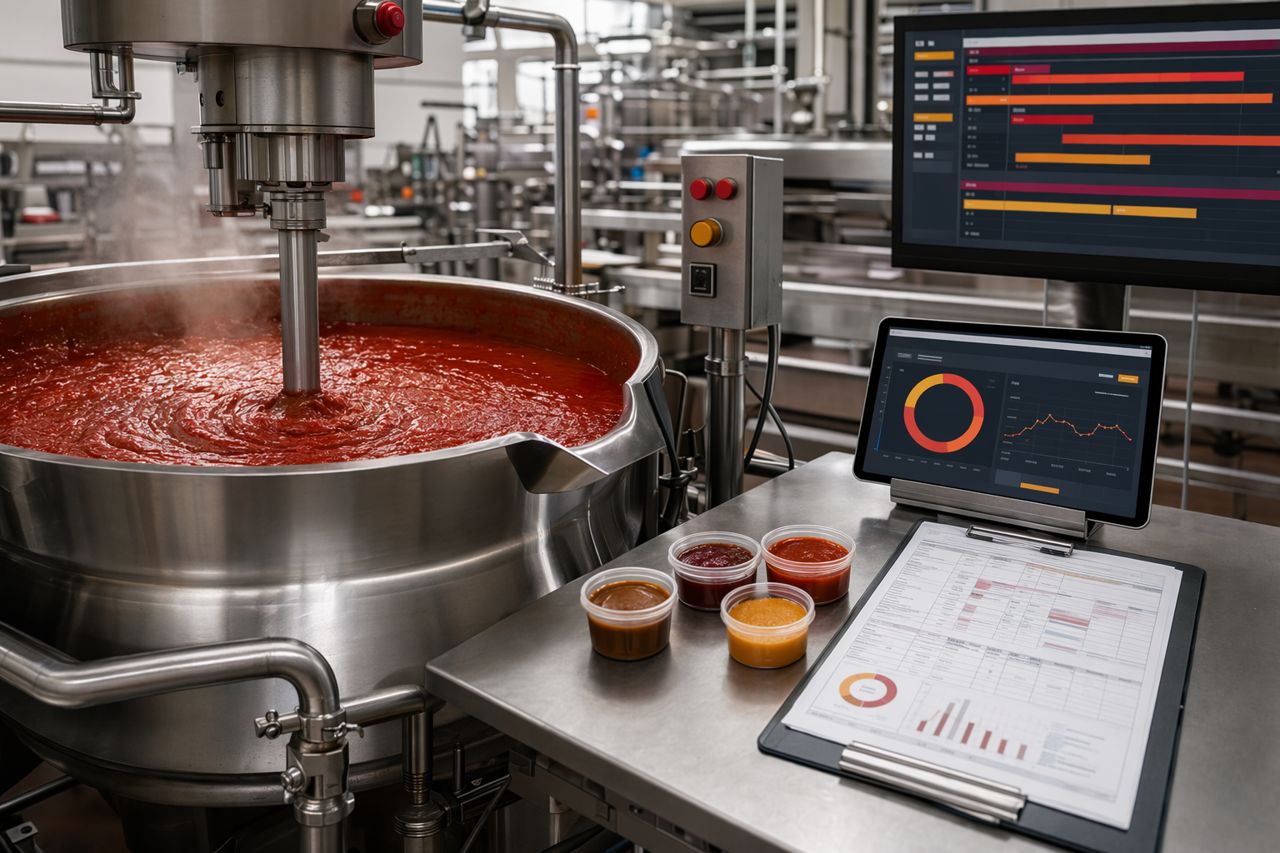
Rework rarely appears as a single dramatic failure. In a high-throughput cloud kitchen sauce factory, it usually shows up as a few extra minutes in the kettle, a texture correction after cooling, a dressing that needs remixing, or a glaze that misses its viscosity target after shear.
Those interventions look manageable in isolation. Across production weeks, they become expensive: more labor, more heat exposure, more quality checks, more line congestion, and less confidence that the next batch will land inside spec.
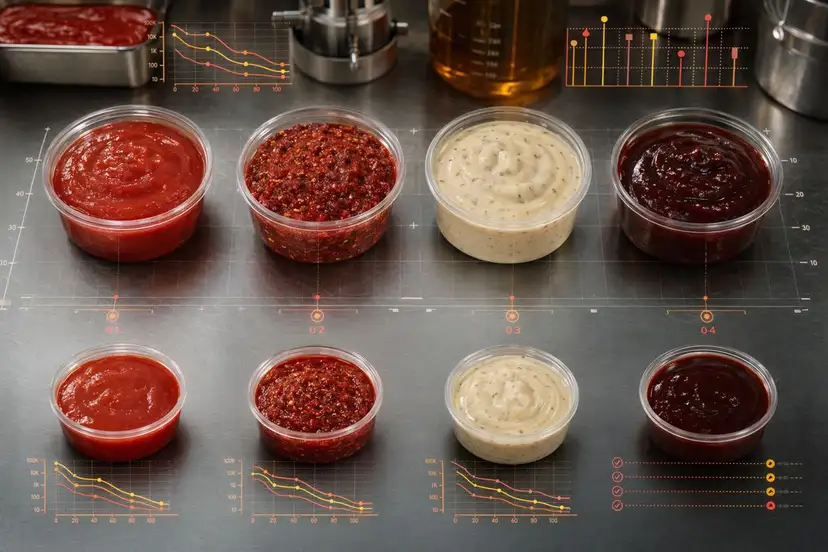
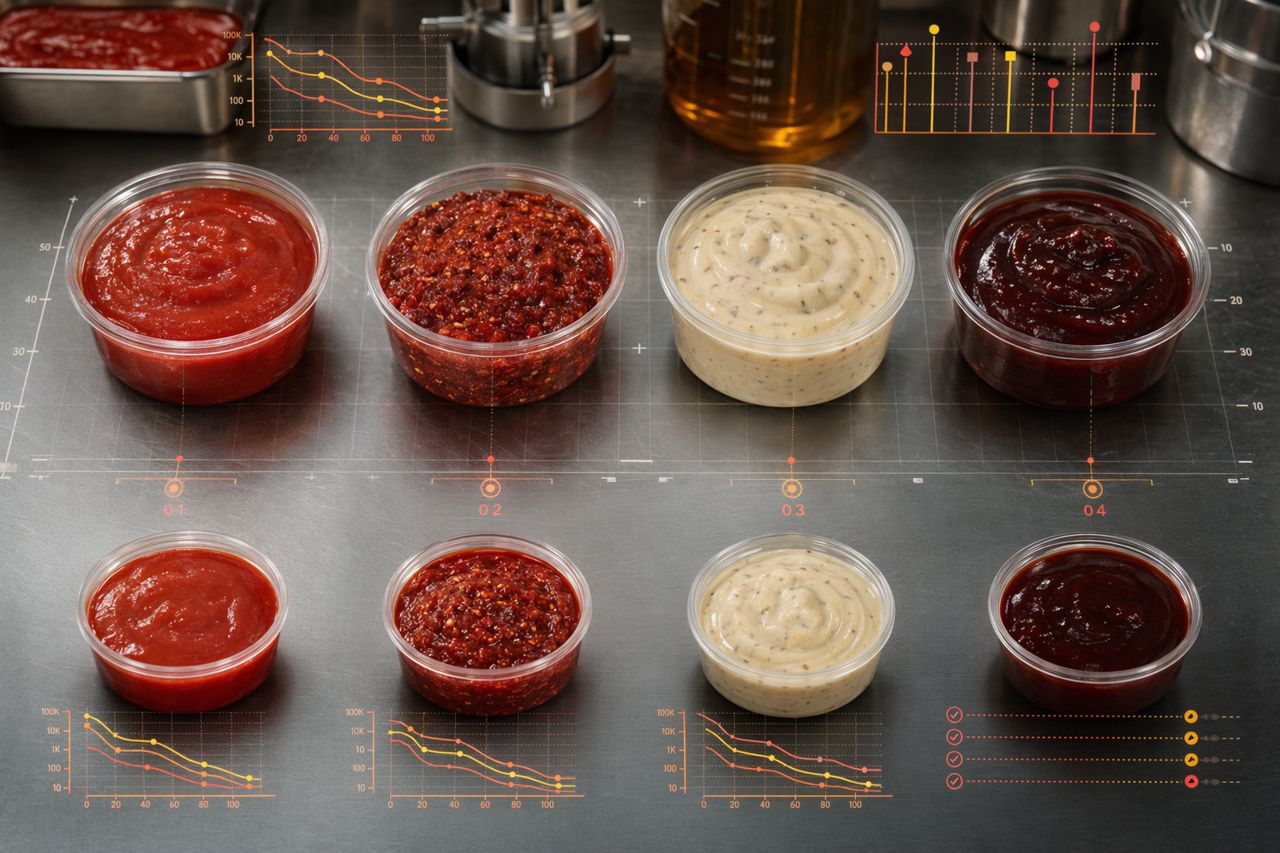
For sauce manufacturers running tomato bases, chili pastes, mayos, gravies, marinades, dressings, and glazes, the commercial question is simple: how much value is being lost before the batch is approved?
LadleMetric works as a food enzyme supplier for sauce manufacturing with an R&D-led focus on formulation control, pilot validation, mouthfeel, yield, stability, and repeatable batch behavior.
What Rework Really Costs
Rework is not only the cost of the ingredient being corrected. It affects the full production system.
1. Labor and supervision
Every off-target batch pulls operators, QA, and production managers away from planned output. Even when a correction is successful, the team has spent time diagnosing, adjusting, documenting, and rechecking.
2. Heat load and flavor impact
Additional holding or reheating can flatten fresh notes, darken color, increase cooked flavor, or alter spice perception. In premium sauces, the sensory cost may be more damaging than the process cost.
3. Packaging delays
A sauce that is not ready on time creates downstream disruption. Fillers wait, packaging materials sit staged, and planned changeovers become less predictable.
4. Yield loss
Viscosity correction, filtration issues, excessive cling, poor pump-out, or discarded edge material can reduce usable output. Small losses compound quickly across high-volume menus and recurring SKUs.
5. Spec drift and customer confidence
Cloud kitchen sauce programs depend on repeatability. If the same sauce behaves differently across shifts, sites, or raw material lots, customer experience becomes harder to protect.
Why Sauce Batches Drift
Sauce is a living system from a formulation perspective. Even when the recipe is fixed, the inputs are not always identical.
Common sources of variation include:
- Natural variation in tomato, chili, fruit, vegetable, or spice solids
- Starch behavior under heat, shear, and acid
- Pectin contribution from pulps, purees, and plant-based materials
- Protein interactions in creamy, dairy-style, or emulsified sauces
- Oil phase behavior in dressings, mayos, and marinades
- Holding time before filling
- Cooling rate and post-process viscosity development
- Shear history from mixing, pumping, and recirculation
- pH and salt effects on structure, flavor release, and stability
A batch can leave the kettle looking acceptable and still drift after cooling, filling, or storage. That is where reactive rework becomes expensive.
Where Enzyme-Led Formulation Support Helps
Enzymes are not a universal fix for every sauce problem. Used correctly, they are precision tools for specific texture, yield, and stability challenges.
LadleMetric supports sauce factories by helping define practical enzyme trial routes around the actual production objective.
Viscosity targeting
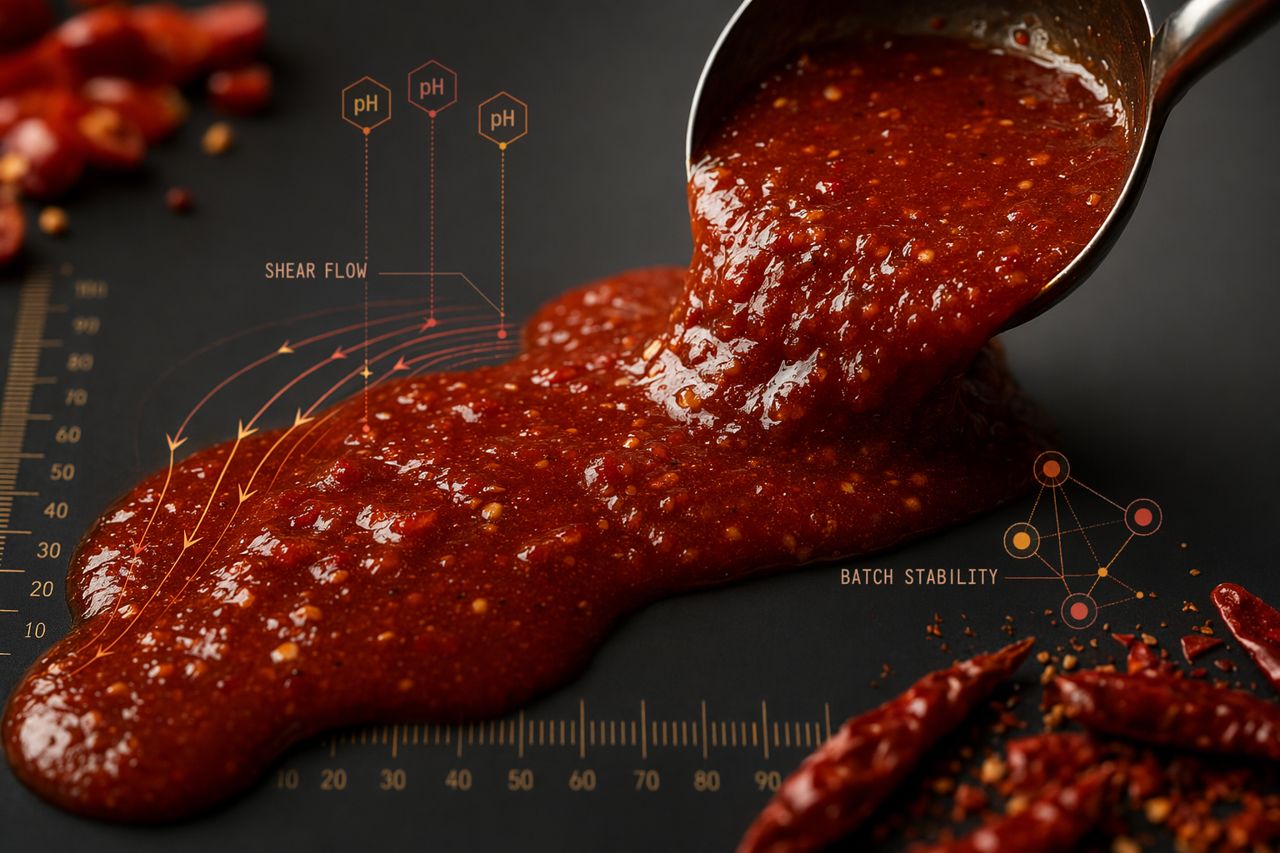
Some sauces become too thick, too thin, or inconsistent after thermal processing. Enzyme selection and trial design can help adjust structure formation, reduce unwanted thickening, or improve flow without stripping away intended mouthfeel.
Pulp and solids behavior
Tomato, chili, fruit, and vegetable systems often contain complex plant structures. Enzyme-led processing can support better release, smoother texture, improved pumpability, or more consistent body depending on the raw material and target finish.
Mouthfeel refinement
A sauce can meet a viscosity number and still feel wrong. It may be pasty, stringy, gummy, watery, grainy, or heavy. LadleMetric evaluates enzyme options through the lens of sensory finish, cling, spread, and release.
Stability and separation control
Rework often begins when a sauce separates, weeps, settles, or changes texture after cooling. Enzyme strategy can be part of a broader stabilization approach alongside formulation, process, emulsification, and hold conditions.
Yield and line efficiency
Better release, smoother transfer, and more predictable viscosity can reduce residue, pumping stress, filtration slowdowns, and correction cycles. The result is not just better sauce; it is a cleaner production rhythm.
The Rework Prevention Loop
The strongest sauce programs do not wait for a failed batch. They create a controlled feedback loop between formulation, pilot trials, production behavior, and finished product review.
A practical rework reduction plan usually includes:
-
Define the target behavior
Viscosity, flow, cling, pour, dip, spread, suspension, emulsion stability, and reheating performance should be described clearly before trial work begins.
-
Map the process window
Heat profile, shear, hold time, pH, salt, sugar, oil, and solids level all shape enzyme performance and sauce behavior.
-
Run focused pilot trials
Trial work should compare process routes, ingredient interactions, and finished texture under conditions that resemble production reality.
-
Check post-process stability
The batch should be assessed after cooling, filling, and storage conditions relevant to the factory and menu application.
-
Transfer only what operators can repeat
A beautiful bench result has limited value if it cannot be run consistently on the line. Repeatability is the commercial objective.
What to Bring to a Supplier Conversation
If your team is discussing enzyme support, come prepared with the production facts that shape a useful recommendation.
Helpful information includes:
- Sauce type and target application
- Current texture problem or rework trigger
- Raw material base and key structural ingredients
- Target mouthfeel and appearance
- Processing steps, heat exposure, mixing, and hold conditions
- pH range, salt, sugar, oil, and solids considerations
- Current stabilizers or starch systems
- Packaging format and storage expectations
- What success would mean commercially: fewer corrections, better yield, faster release, improved stability, or cleaner sensory quality
The more specific the brief, the faster the pilot path can become practical.
Red Flags That Rework Is Becoming Structural
Occasional adjustment is normal. A rework pattern is different.
Watch for these signals:
- Operators regularly make informal texture corrections
- Batches pass hot but fail after cooling
- Fill weights vary because flow is inconsistent
- Sauces require extended hold time to reach target body
- Separation appears after packaging or transport simulation
- Ingredient lots create repeated viscosity swings
- QA release time is increasing
- The same issue appears across related SKUs
When these issues repeat, the cost is no longer hidden. It is built into the line.
The LadleMetric View
Rework reduction is not about forcing a formulation into a narrow lab ideal. It is about building a sauce process that can absorb real factory variation and still deliver the intended eating experience.
That requires technical discipline, not guesswork: define the target, run controlled trials, understand the material system, and transfer only the process conditions that production can repeat.
As a consultative food enzyme supplier for sauce manufacturing, LadleMetric supports R&D, QA, and production teams looking for better control of viscosity, yield, mouthfeel, and stability in commercial sauce programs.
Request a Quote
If rework is consuming time, yield, or confidence in your sauce line, send us your target texture, current challenge, process constraints, and application type.
Use the on-site request a quote form to start a technical conversation with LadleMetric.