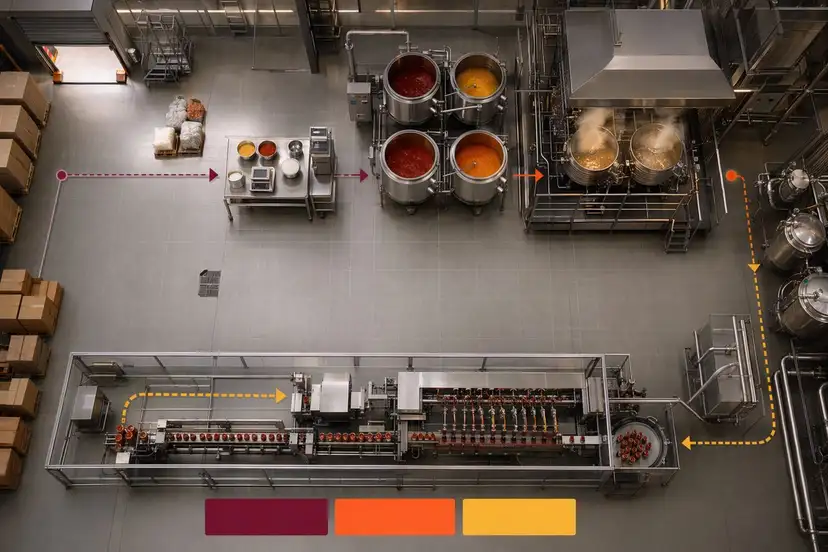
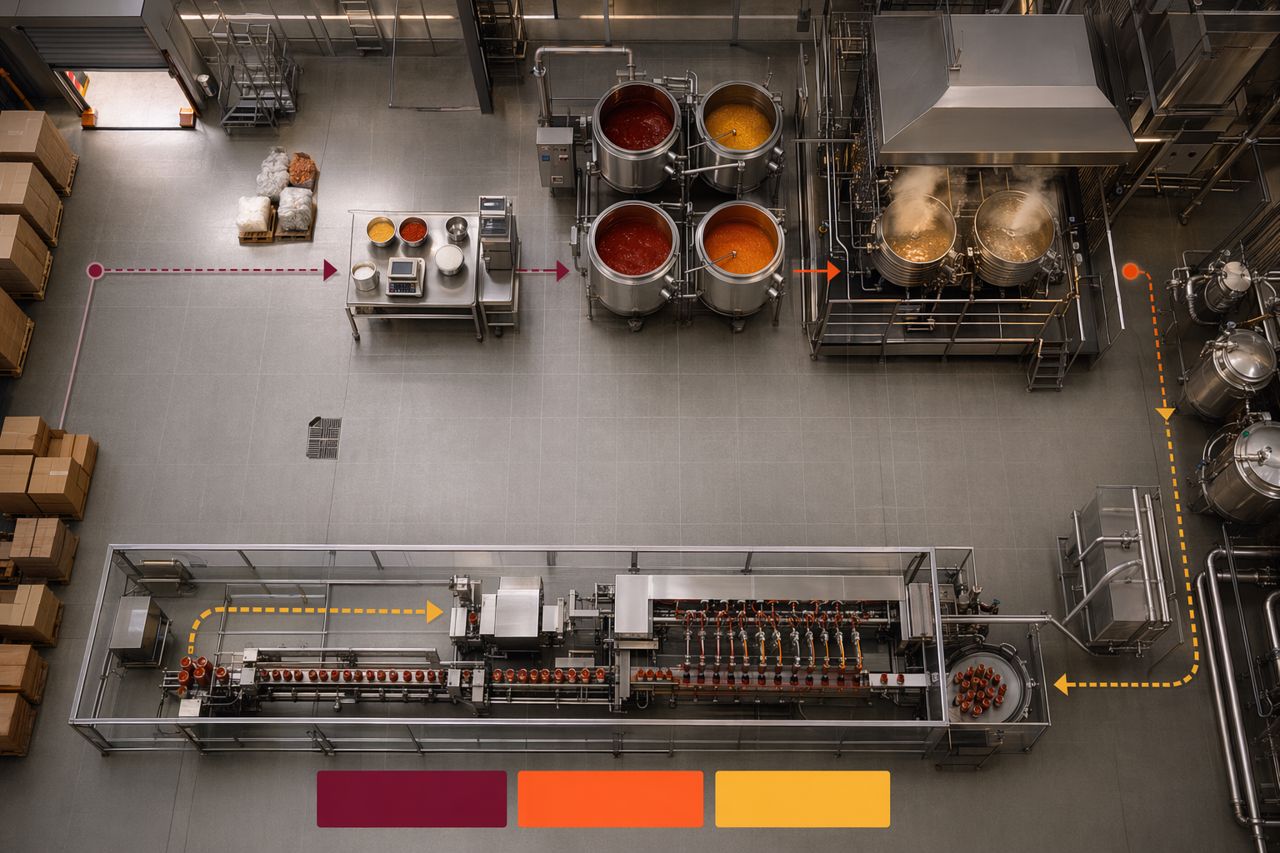
Cloud Kitchen Sauce Factory Layout: Batch, Cook, Hold, and Fill Zones
A practical R&D-led guide to organizing sauce factory zones for repeatable viscosity, yield, stability, SKU changeovers, and high-throughput cloud kitchen supply.
Request pricing A practical R&D-led guide to organizing sauce factory zones for repeatable viscosity, yield, stability, SKU changeovers, and high-throughput cloud kitchen supply.
Request pricingCloud kitchen sauce factories live between restaurant speed and industrial discipline. One line may support tomato bases, chili oils, emulsified dressings, glazes, gravies, marinades, and regional limited-time sauces in the same week. The layout has to protect flavor identity while keeping viscosity, yield, mouthfeel, and fill accuracy repeatable.
For R&D, operations, and procurement teams, the right factory layout is not only about equipment placement. It is about building a controlled path from raw ingredient variability to stable finished sauce. That includes where ingredients are staged, when heat is applied, how shear is introduced, where enzyme conditioning may support texture or yield targets, and how the product is held before filling.
LadleMetric works with sauce manufacturers that need practical enzyme guidance inside real production constraints. As a food enzyme supplier for sauce manufacturing, we focus on formulation intent, pilot-to-plant transfer, and measurable process fit rather than generic ingredient substitution.
A cloud kitchen sauce factory usually works best when the layout separates two different types of work:
This distinction matters because sauces are highly sensitive to order of addition, heat history, shear exposure, and holding time. A short, clean ingredient path reduces handling errors. A clear transformation sequence improves batch repeatability.
A practical high-throughput flow is:
The goal is not a rigid blueprint. The goal is a sequence that prevents backtracking, cross-traffic, and uncontrolled waiting time.
Sauce variability often starts before the kettle. Tomato paste, chili mash, onion puree, garlic, fruit concentrates, hydrocolloids, starches, oils, vinegars, dairy ingredients, and spice blends can vary in solids, fiber behavior, acidity, particle structure, and flavor strength.
A well-planned receiving zone should support:
For cloud kitchen supply, this area should be close enough to batching to avoid unnecessary travel but separated enough to prevent congestion. Ingredient staging becomes especially important when many SKUs share the same base materials but diverge through spices, acids, emulsifiers, or heat profile.
Minor ingredients are high-impact in sauce production. Salt, sugar, acids, gums, starches, preservatives, colors, smoke flavors, spice extracts, and enzyme preparations must be added in the right sequence and dispersed properly.
A dedicated pre-weigh room or kitting station reduces operator burden at the kettle. It also supports better changeovers because each batch has a confirmed kit before production begins.
Good kitting practice includes:
If enzyme use is part of a process, the pre-weigh area should protect the enzyme from heat, moisture, and accidental early addition. Enzyme timing is part of the process design, not a last-minute adjustment.
The batch zone is where solids, liquids, oils, acids, and thickeners first become a controllable sauce system. This is where many viscosity problems originate.
In a cloud kitchen sauce factory, batching should answer four questions:
For starch-thickened sauces, hydration and heating sequence are critical. For gum-stabilized dressings, powder dispersion and shear profile matter. For vegetable-based sauces, particle size and fiber behavior can determine pumpability, fill weight control, and mouthfeel.
Where enzyme conditioning is appropriate, batching may include a controlled pre-cook or intermediate hold designed to modify plant tissue behavior, improve extraction, support smoother flow, or help manage viscosity at a target solids level. The layout should give operators enough control to stop the step cleanly and move into heating, finishing, or inactivation as defined by the process.
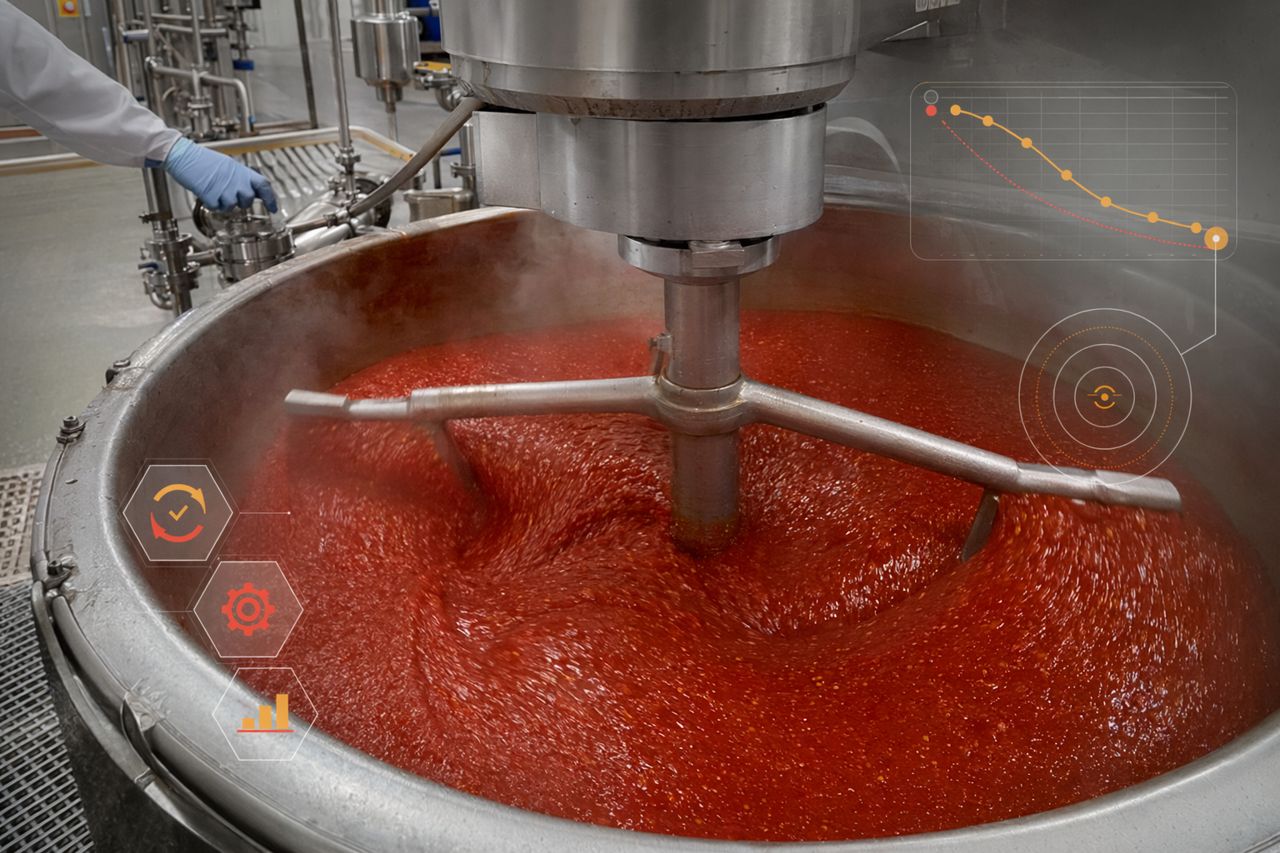
The cook zone is the factory’s most obvious transformation point. It develops flavor, hydrates starches, reduces microbial risk, evaporates water when needed, and sets the foundation for final texture.
Common equipment choices include:
Cook zone placement should account for steam, condensate, ventilation, operator access, and safe product transfer. It should also be close to finishing or hold tanks to reduce product residence time in transfer lines.
From a formulation perspective, the cook step must align with viscosity targets. Overcooking can dull top notes, damage particulates, darken colors, and create excessive thickening. Undercooking can leave hydration incomplete or create unstable viscosity after filling.
Not every sauce needs enzymes. But for certain vegetable-rich, fruit-based, starch-containing, dairy-influenced, or protein-containing systems, enzyme selection can help the factory reach a more reliable processing window.
Potential B2B value areas include:
The enzyme conditioning zone does not have to be a separate room. It may be a controlled tank, a defined stage inside the batch kettle, or an inline hold segment. What matters is that time, temperature, pH range, mixing, and stop-point are built into the manufacturing instruction.
LadleMetric’s role is to help teams decide whether an enzyme step belongs in the process at all, then define where it should sit relative to cook, shear, acidification, and filling. The best result is not maximum reaction. It is the right texture and yield outcome within the production schedule.
Finishing is where sauces move from cooked batch to specification. This may include high-shear mixing, emulsification, particle size reduction, oil incorporation, flavor adjustment, acid balancing, deaeration, or final viscosity correction.
The finishing zone should be designed around the sauce portfolio. A chili crisp line, a smooth tomato base, and a creamy dressing do not need the same mechanical treatment.
Key layout considerations include:
Finishing is also the right place to confirm whether the earlier process did its job. If every batch requires heavy correction at this stage, the issue is usually upstream: ingredient variability, hydration order, cook profile, enzyme timing, or hold conditions.
Holding is often underestimated. In a cloud kitchen sauce factory, hold tanks act as buffers between batch cooking and filling, but they can also change the product.
A good hold strategy defines:
For sauces containing particulates, poor holding can cause settling, floating oil, uneven fill composition, or texture damage. For emulsified sauces, the wrong agitation can break structure. For starch or fiber-rich sauces, viscosity can drift during hold.
The physical layout should place hold tanks close to filling but not in the way of packaging material flow. Operators should be able to sample, connect, disconnect, and clean without crossing active forklift or pallet routes.
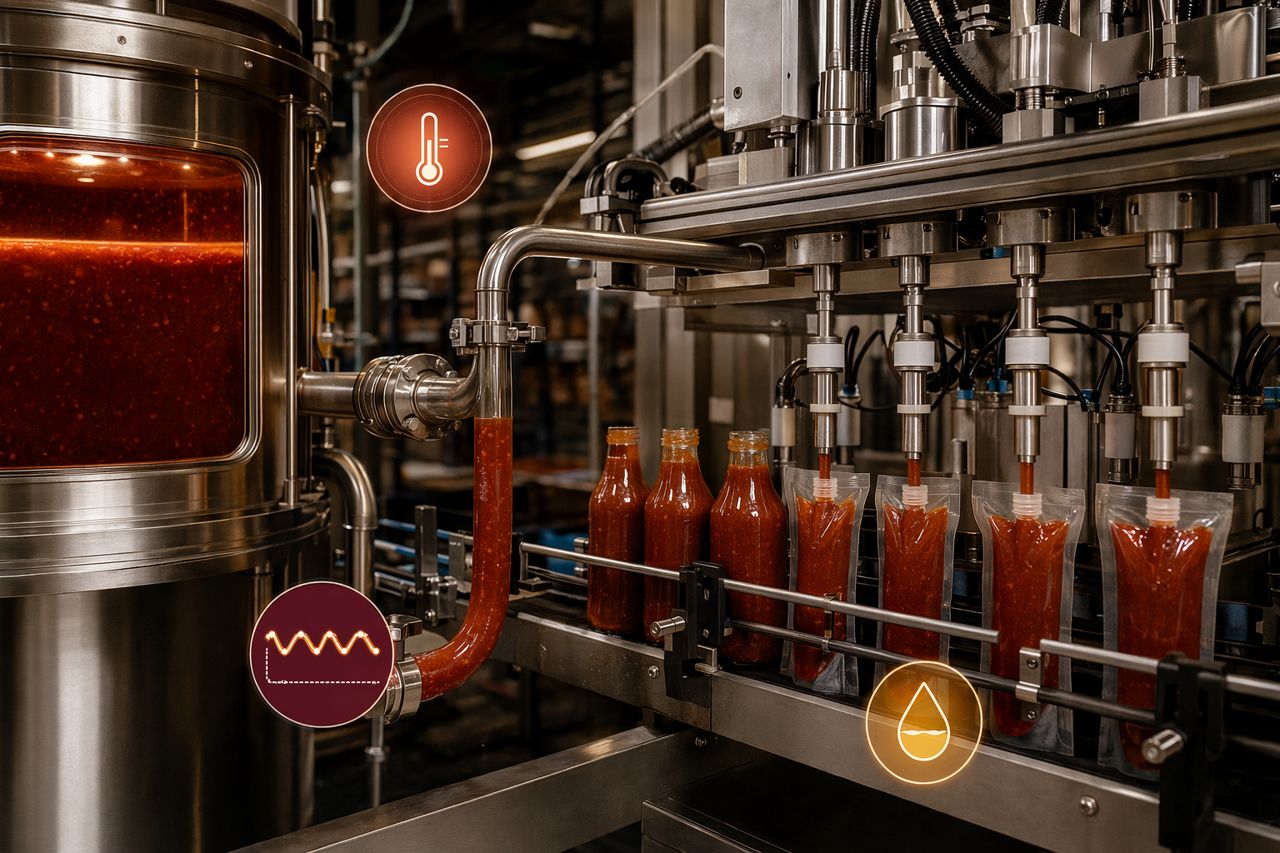
The fill zone converts sauce behavior into sellable units. Viscosity, temperature, particulates, foaming, and air entrainment all affect fill accuracy and packaging appearance.
Common sauce fill challenges include:
When layout planning connects formulation to filling, the factory can avoid designing a fast packaging room around an unstable product. The filler, pump, hopper, nozzle, and line controls should be chosen with the actual sauce rheology in mind.
For high-SKU cloud kitchen operations, quick-change parts, clear sanitation access, and dedicated allergen or high-color product strategies often deliver more value than simply adding filling speed.
Sauce factories handle sticky, acidic, oily, spicy, particulate, and allergen-containing materials. The layout must support cleaning as a production activity, not an afterthought.
Plan for:
Cloud kitchen sauce manufacturing rewards short, controlled changeovers. A line that can switch from sesame dressing to tomato glaze to spicy mayo without confusion has a real commercial advantage.
Before locking the factory layout, run pilot trials that reflect the intended product mix. The trial should not only test flavor. It should test how the sauce moves.
Useful pilot questions include:
The most valuable trial outcome is a manufacturing instruction that links zones, timing, sampling points, and decision gates. This is where R&D-led layout planning creates operational value.
LadleMetric supports sauce manufacturers with enzyme selection and process-fit guidance for pilot and production environments. We help teams evaluate where enzyme use can create practical value and where mechanical, thermal, or formulation changes are the better answer.
Typical collaboration areas include:
The result is a sauce process that is easier to run, easier to scale, and easier to repeat across menu cycles.
If you are planning a new cloud kitchen sauce factory, improving an existing line, or evaluating enzyme-enabled texture and yield improvements, LadleMetric can help define the right process window.
Request a quote through our on-site form and share your sauce type, target texture, current bottleneck, and production format. We will respond with practical next steps for formulation trials and supply fit.
Tell us your application and volume — we reply with pricing and lead time.